Best Floor Cleaning Equipment for Warehouses and Industrial Facilities
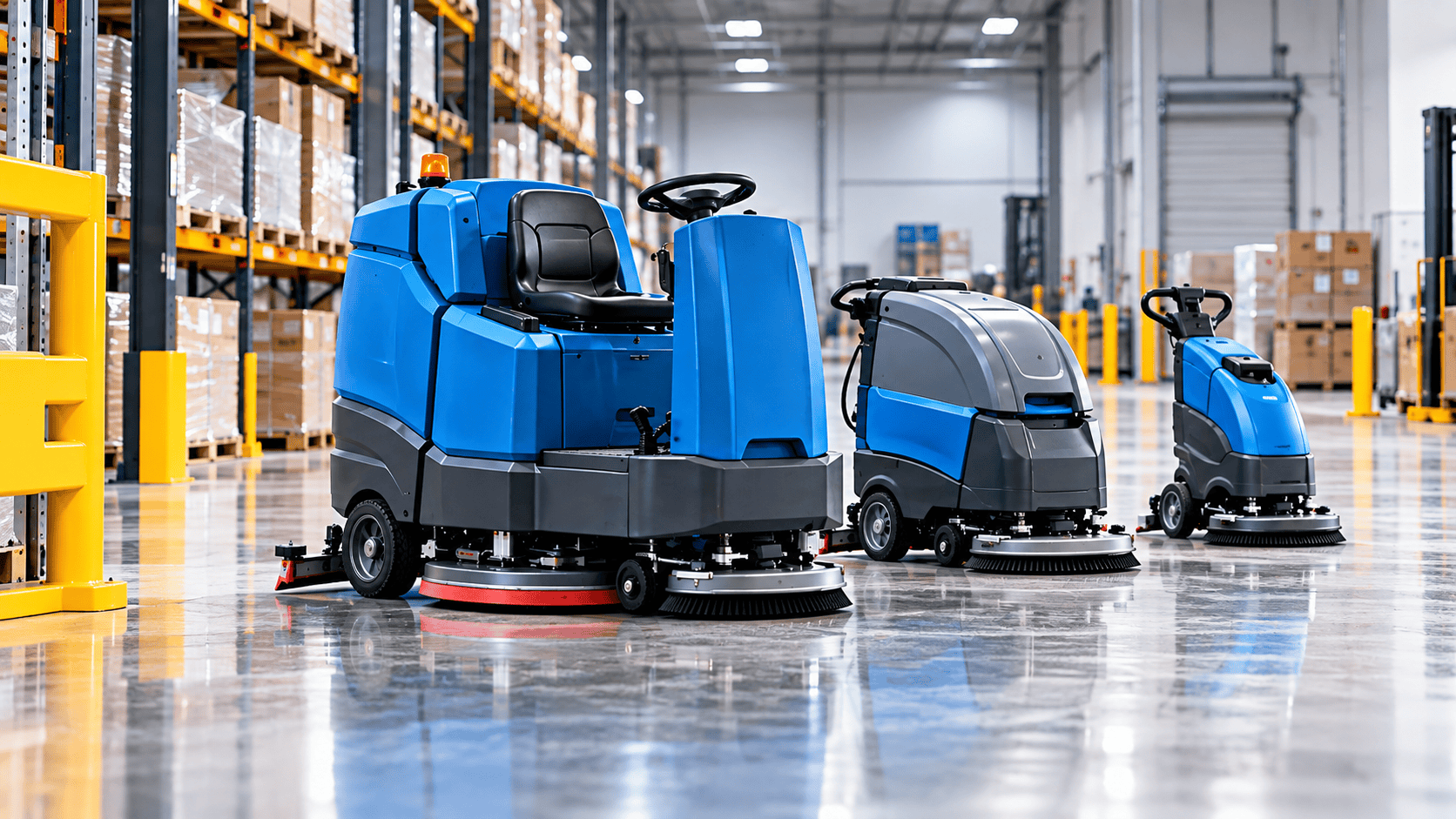
Warehouses and industrial facilities deal with a constant flow of people, equipment, materials, dust, dirt, and debris. With forklifts moving through aisles and employees working throughout the day, keeping floors clean can quickly become a challenging task.
Regular cleaning is not only important for maintaining a professional environment but also helps create safer working conditions and protect the condition of the facility. Traditional mops and brooms may work for small areas, but they are rarely practical when you are responsible for thousands of square feet.
This is where commercial floor cleaning equipment can make a real difference. The right machine can help your cleaning team cover more ground, remove difficult dirt, and maintain floors with less time and effort.
Floor Sweepers for Everyday Warehouse Debris
Dust, dirt, packaging materials, wood particles, and other dry debris are common in warehouses. Allowing this material to accumulate can make floors look neglected and may also create slipping or tripping hazards.
Industrial floor sweepers are designed to handle these everyday cleaning challenges. They use rotating brushes to collect debris and direct it into a collection hopper, allowing operators to clean large areas much faster than they could with manual sweeping.
For smaller warehouses or areas with narrow aisles, a walk behind sweeper can provide excellent maneuverability. Larger facilities may benefit from a ride on sweeper that allows operators to cover extensive floor areas efficiently.
Regular sweeping is particularly useful in warehouses where dust and loose debris are the primary concerns. It can also serve as an important first step before deeper floor cleaning.
Automatic Floor Scrubbers for Deeper Cleaning
Sweeping removes loose debris, but it cannot deal with every type of floor contamination. Warehouses and manufacturing facilities may also experience oil residue, stains, tracked in dirt, spills, and built up grime.
An automatic floor scrubber is designed for these tougher cleaning jobs. These machines apply water and cleaning solution to the floor while brushes or pads agitate the surface. A built-in recovery system then collects the dirty water, leaving the floor considerably cleaner.
Walk behind floor scrubbers are a practical choice for smaller facilities, narrow spaces, and areas where the operator needs greater control. They are also useful when cleaning needs vary from one area of a facility to another.
For larger warehouses, riding on floor scrubbers can provide a significant productivity advantage. The operator can remain seated while the machine cleans a wide path, making it easier to maintain extensive floor areas without the physical effort associated with traditional cleaning methods.
Sweeper Scrubbers for More Demanding Environments
Some facilities have to deal with both loose debris and stubborn floor dirt. In these situations, using separate machines for sweeping and scrubbing may require additional time and labor.
Sweeper scrubber machines offer a solution by combining sweeping and scrubbing functions in a single piece of equipment. They can collect dry debris while also cleaning the floor with water and cleaning solution.
This type of equipment can be particularly useful in manufacturing plants, distribution centers, large warehouses, parking areas, and other industrial environments where floors become heavily soiled throughout the day.
When considering a sweeper scrubber, look at factors such as cleaning width, tank capacity, battery performance, brush configuration, and how easily the machine can be operated and maintained.
Choosing Between Walk Behind and Ride On Equipment
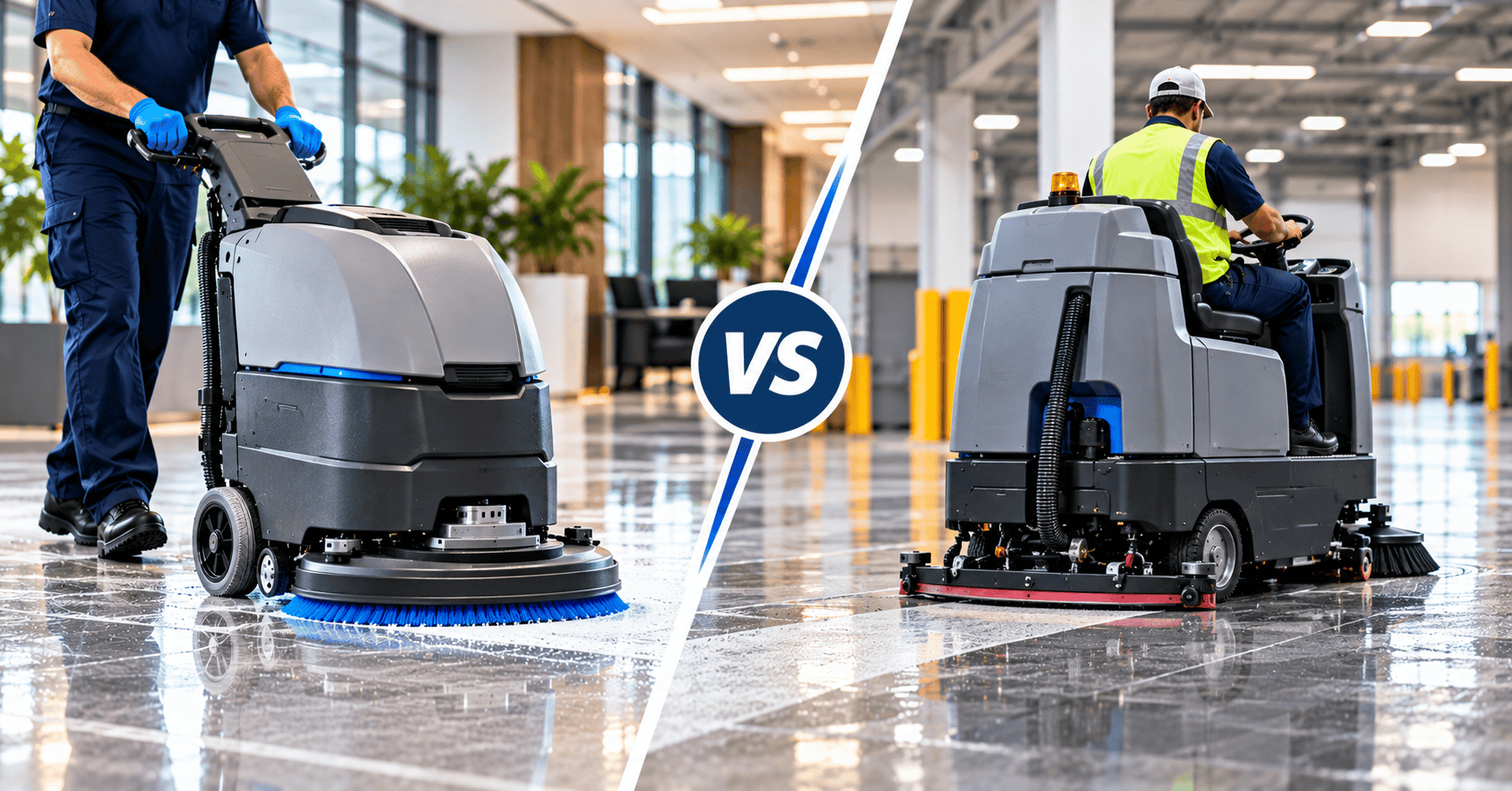
The size and layout of your facility should play a major role in deciding between walk behind and ride on cleaning equipment.
Walk behind machines are generally compact and easier to maneuver around shelving, equipment, corners, and narrow aisles. They can be an excellent choice when the facility has a smaller cleaning area or several confined spaces.
Riding on machine is better suited to large open areas where cleaning speed is a priority. They allow operators to cover more floors with less physical effort, which can be especially valuable for facilities that need frequent cleaning.
There is no single machine that works best for every warehouse. The right choice depends on your floor area, cleaning schedule, type of debris, and daily operating conditions.
Should You Buy New or Reconditioned Equipment?
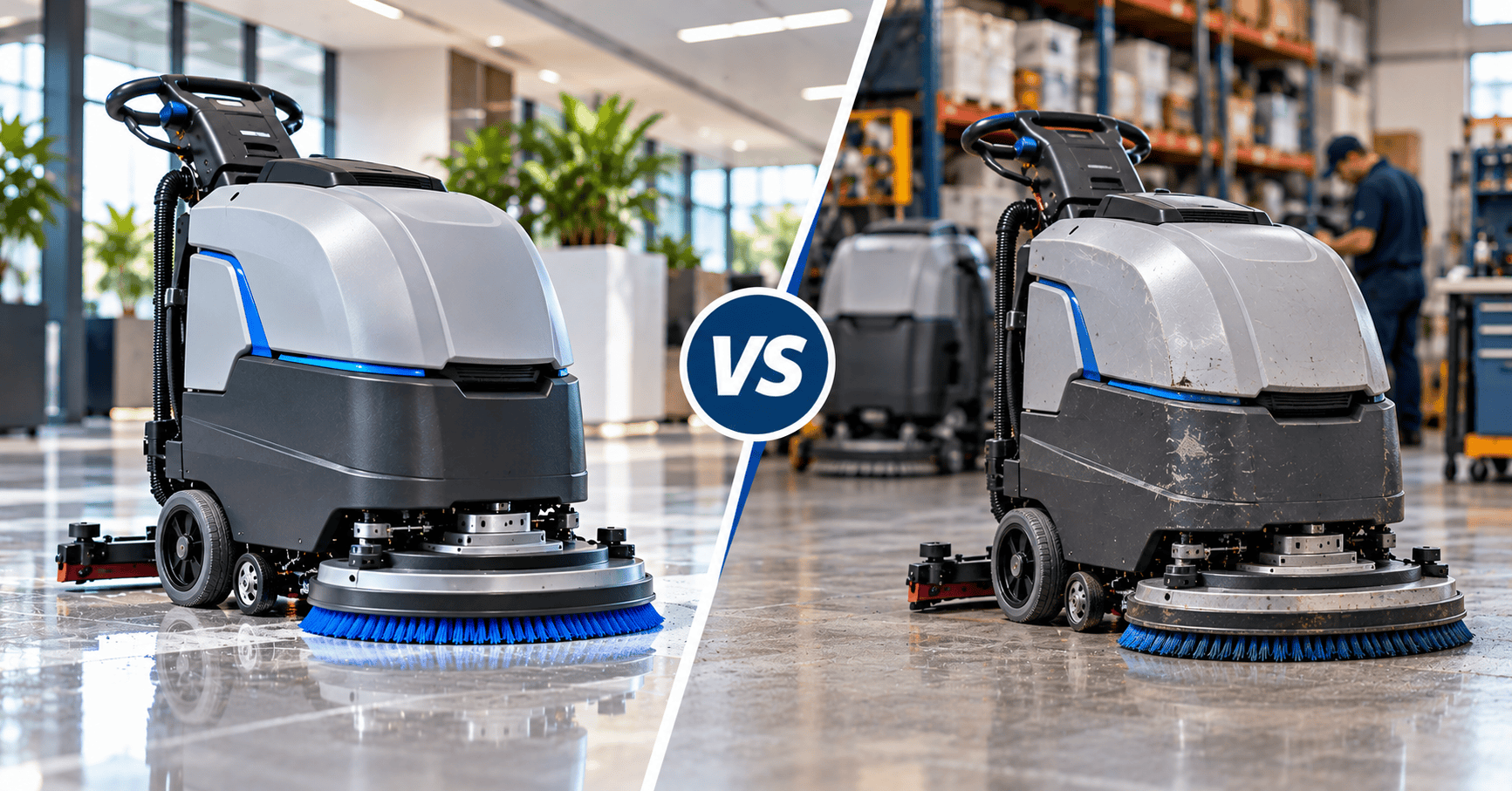
The cost of commercial floor cleaning equipment can be an important consideration, particularly for businesses managing large facilities or multiple locations. While new equipment can provide the latest technology and features, professionally reconditioned machines can be an economical alternative.
Reconditioned floor scrubbers and sweepers can provide access to established commercial equipment at a lower initial investment. However, it is important to understand what has been done to the machine before making a purchase.
Look for equipment that has been properly inspected and serviced, along with reliable access to replacement parts and ongoing support. A well maintained reconditioned machine can be a practical option for businesses that want dependable cleaning performance while managing their equipment budget.
How to Select the Right Floor Cleaning Machine
Choosing floor cleaning equipment should start with your facility rather than the machine itself. Consider the total floor area, type of flooring, amount of daily traffic, and the kind of dirt or debris your team regularly encounters. You should also think about aisle width, battery runtime, tank capacity, cleaning path, operator comfort, storage requirements, and routine maintenance.
For facilities that mainly deal with dust and loose debris, a sweeper may be all that is required. If the floors regularly have stains, grease, or embedded dirt, an automatic scrubber may be more appropriate.
Larger and more demanding facilities may benefit from combining both types of equipment. The goal is simple: choose equipment that allows your team to clean effectively without spending unnecessary time, labor, or resources.
FAQs
What is the best floor cleaning equipment for warehouses?
The best equipment depends on the cleaning requirements of the facility. Floor sweepers are ideal for dust and loose debris, while automatic floor scrubbers are better for dirt, stains, and grime. Larger facilities may benefit from riding on machines.
Are ride on floor scrubbers suitable for industrial facilities?
Yes. Ride on floor scrubbers are particularly useful for large industrial facilities because they can clean substantial floor areas efficiently while reducing the physical workload for operators.
What is the difference between a floor sweeper and a floor scrubber?
A floor sweeper is primarily designed to collect dry dirt and debris. A floor scrubber uses water, cleaning solution, and brushes or pads to remove deeper dirt and stains from hard floors.
Is reconditioned cleaning equipment a good option?
Professionally reconditioned equipment can be a cost effective choice when it has been thoroughly inspected and serviced. Businesses should also consider the machine’s condition, maintenance history, available parts, and support before purchasing.