Role of Commercial Floor Cleaning Equipment in Maintaining Retail Stores and Shopping Centers
Clean floors play an important role in creating a positive shopping experience. Whether customers are visiting a small retail store, a busy supermarket, or a large shopping center, they expect a clean, safe, and welcoming environment.
Dust, dirt, stains, and footprints can quickly affect the appearance of a commercial space, especially in areas with heavy foot traffic. Maintaining these spaces requires more than traditional mops and buckets.
Commercial floor cleaning equipment helps businesses maintain cleanliness, improve cleaning efficiency, and protect their flooring investments. From floor scrubbers and sweepers to buffers and commercial vacuums, the right machines make daily maintenance easier and more effective.
For retail businesses and shopping center managers, investing in suitable floor cleaning equipment is an important step toward maintaining professional standards and providing a better experience for customers and employees.
Creating a Positive First Impression
First impressions matter in retail. Customers often notice the condition of a store as soon as they enter. Clean entrances, polished floors, and well maintained walkways create an impression of professionalism and attention to detail.
Shopping centers face an even greater challenge because hundreds or thousands of visitors may pass through their common areas every day. Dirt carried in from outside, food spills, and marks from shoes can quickly make floors look neglected.
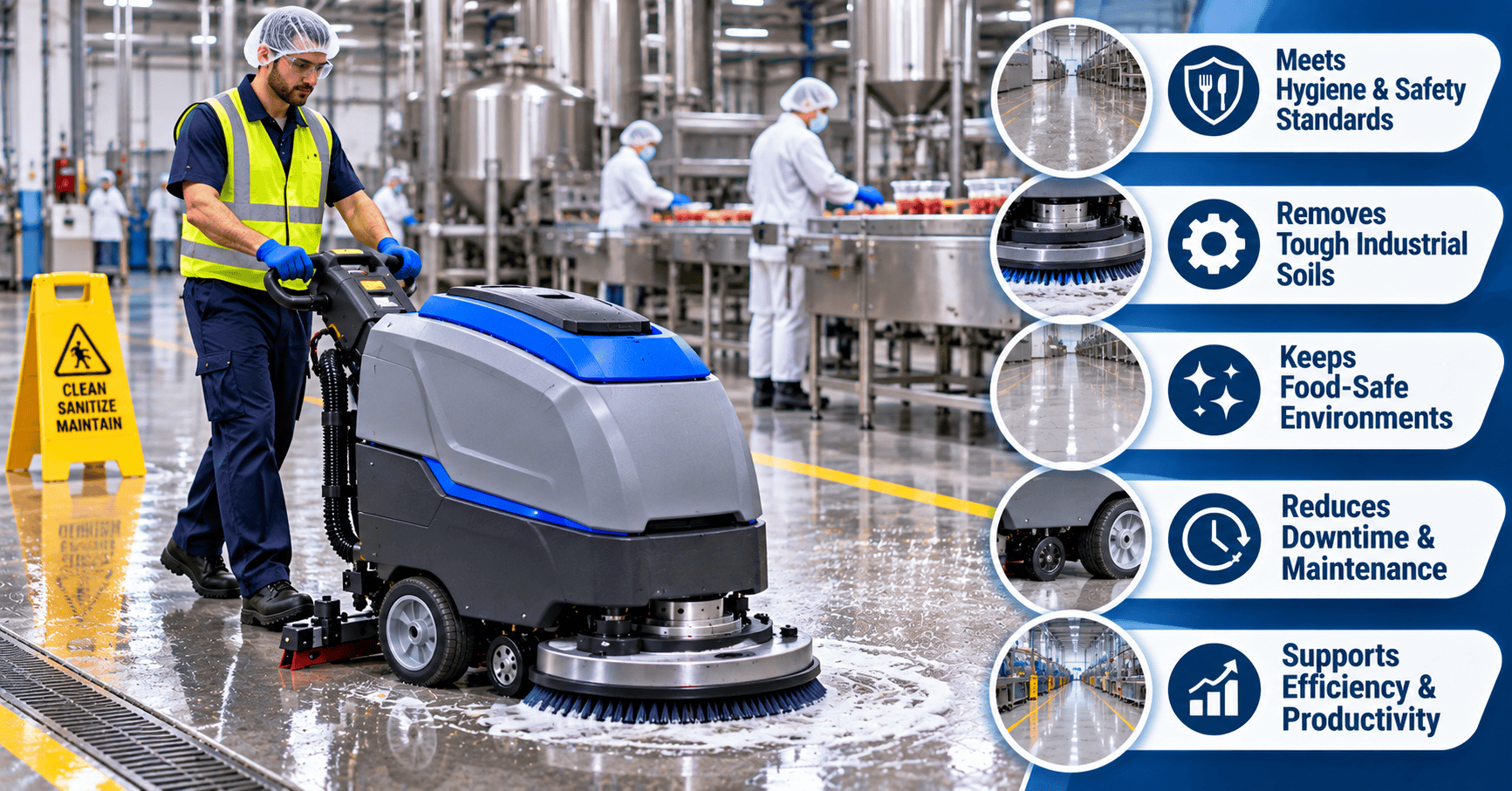
Commercial floor cleaning equipment helps maintenance teams manage these challenges more consistently. Floor sweepers collect dust, loose debris, and everyday dirt, while floor scrubbers remove stubborn grime and surface buildup.
Regular cleaning keeps floors looking presentable throughout the day and supports a more inviting shopping environment.
Improving Safety for Customers and Employees
Floor safety is another major reason retail stores and shopping centers need professional cleaning equipment. Spilled drinks, tracked in rainwater, greasy residue, and loose debris can create slipping or tripping hazards.
Traditional cleaning methods may not always provide the speed and consistency required in busy commercial environments. Commercial floor scrubbers can apply cleaning solution, scrub the surface, and recover dirty water in a single operation.
This helps remove contaminants while reducing the amount of water left behind when the machine is used correctly. However, equipment alone cannot guarantee a completely slip resistant floor.
Staff must also follow appropriate cleaning procedures, use suitable products, place warning signs where necessary, and allow surfaces to dry according to the manufacturer’s instructions.
A well planned cleaning routine helps retailers maintain safer walkways, entrances, food courts, and other high traffic areas.
Reducing Cleaning Time and Labor Costs
Cleaning a large retail space manually can take considerable time, particularly when the same areas require attention several times a day. For shopping centers with extensive corridors and open common areas, the workload can quickly become difficult to manage.
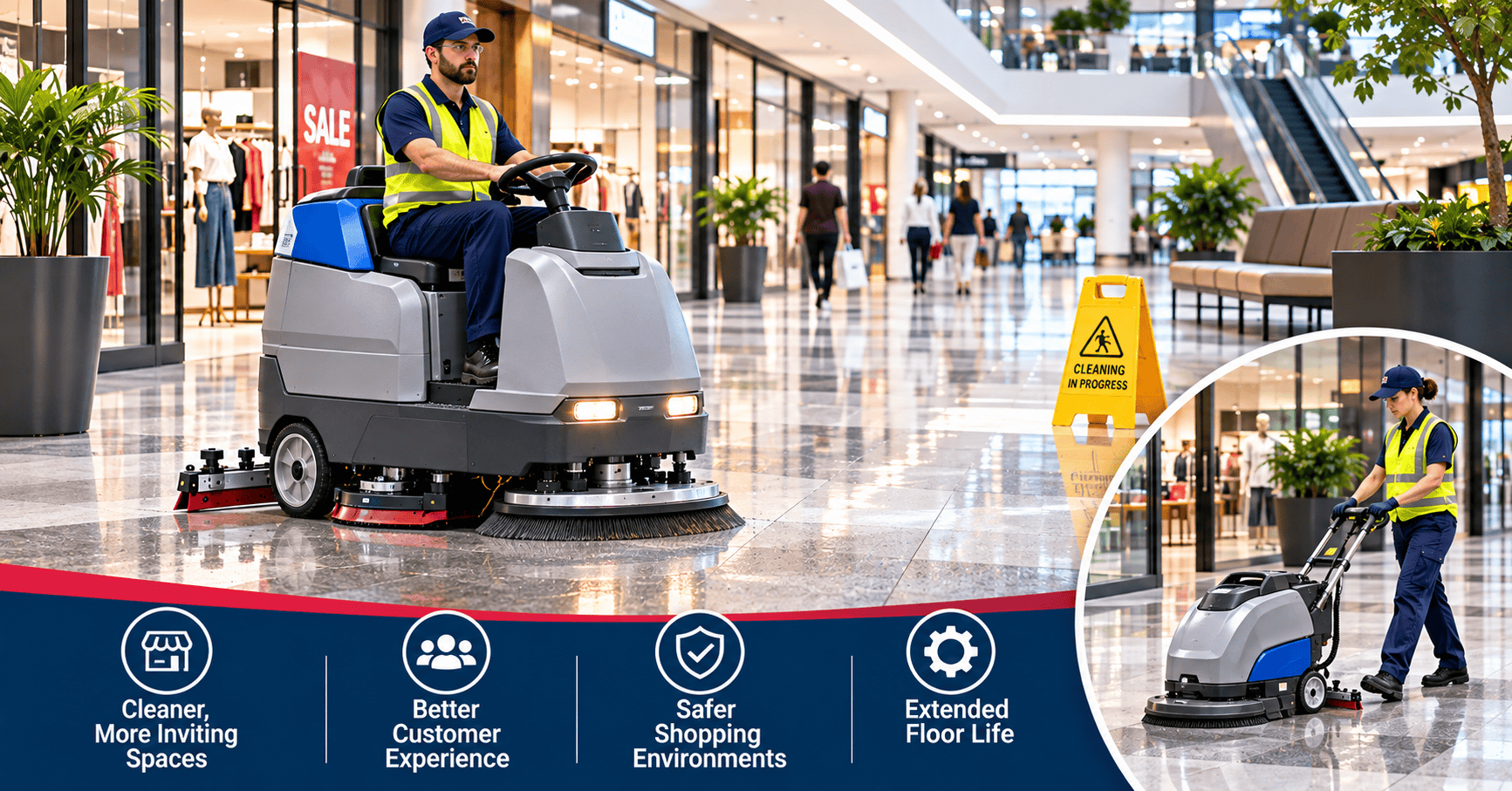
Commercial floor cleaning equipment allows cleaning teams to cover larger spaces more efficiently. Walk behind floor scrubbers are useful for smaller retail locations, narrow aisles, and areas with frequent obstacles.
Ride on floor scrubbers can be a practical choice for large supermarkets, department stores, and shopping center corridors. By choosing equipment that matches the size and layout of a facility, managers can improve productivity and make better use of available staff.
Employees may spend less time on repetitive cleaning tasks and more time addressing spills, restrooms, entrances, and other areas that require individual attention. Over time, improved efficiency can help control operating costs without compromising cleanliness.
Protecting Flooring and Maintaining Appearance
Retail floors experience constant wear from shoes, shopping carts, delivery equipment, and everyday movement. Without regular maintenance, dirt and abrasive particles can gradually damage floor finishes and contribute to a worn appearance.
Different flooring materials require different cleaning approaches. Commercial floor buffers and burnishers help maintain the appearance of suitable finished hard floors, while commercial vacuums and carpet cleaning machines support the care of carpeted areas.
Using the correct equipment and cleaning products can help reduce unnecessary wear and preserve the appearance of flooring for longer. This is particularly valuable for shopping centers, where replacing or restoring large floor areas can be expensive and disruptive.
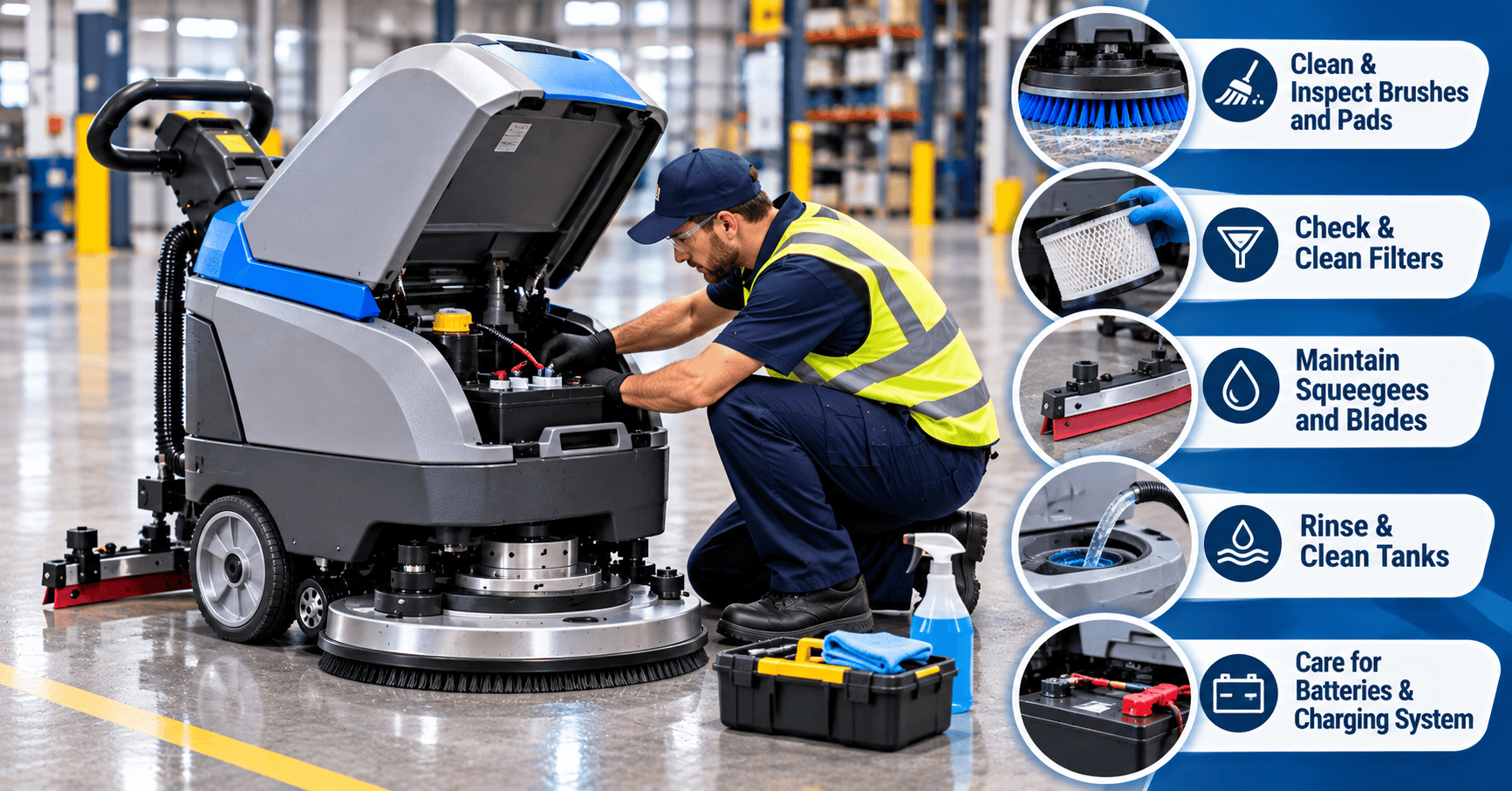
Before selecting a machine, businesses should consider their flooring material, cleaning frequency, and maintenance requirements. Proper training and routine equipment care are equally important for achieving reliable results.
Choosing Right Commercial Floor Cleaning Equipment
Selecting the right machine begins with understanding the facility’s actual needs. Retail managers should evaluate floor space, flooring type, customer traffic, available storage, operating hours, and maintenance budgets.
Floor scrubbers are suitable for removing grime from many hard floor surfaces. Sweepers help collect loose dirt and debris, while buffers maintain compatible floor finishes. Commercial vacuums and carpet cleaners are essential for stores and shopping centers with carpeted areas.
Equipment condition also matters. New and reconditioned machines may offer different advantages depending on the budget and cleaning requirements. Buyers should consider warranty coverage, replacement parts, service support, and long term operating costs rather than focusing on the initial purchase price alone.
Lifetime Equipment offers commercial floor scrubbers, sweepers, buffers, carpet cleaners, vacuums, and robotic cleaning equipment from established manufacturers. Having access to different equipment categories helps businesses evaluate solutions that suit their facility and cleaning goals.
Conclusion
Commercial floor cleaning equipment plays a vital role in maintaining retail stores and shopping centers. It helps businesses create better first impressions, support safer walking surfaces, improve staff productivity, and protect valuable flooring.
The most effective approach combines appropriate equipment with trained operators, regular maintenance, and a consistent cleaning schedule. By choosing machines that match their space and daily demands, retail businesses can maintain cleaner facilities while managing labor and maintenance costs more effectively.
Investing in the right commercial floor cleaning equipment is not just about keeping floors clean. It is about creating a comfortable shopping environment, protecting long term assets, and maintaining the professional standards customers expect.
Frequently Asked Questions
1. What is the best commercial floor cleaning equipment for retail stores?
The best equipment depends on the store’s size, flooring type, and daily foot traffic. Walk behind floor scrubbers work well in many smaller stores, while larger locations may benefit from ride on scrubbers. Sweepers, commercial vacuums, and buffers support other cleaning and maintenance needs.
2. How often should retail store floors be cleaned?
Cleaning frequency depends on customer traffic, weather, floor material, and the type of business. Entrances and busy walkways may require attention several times a day, while deeper cleaning can follow a scheduled routine based on actual conditions.
3. Can commercial floor scrubbers help reduce labor costs?
Yes. Commercial floor scrubbers can clean larger areas more efficiently than many manual methods. The potential savings depend on the machine, facility size, operator training, maintenance requirements, and how effectively cleaning tasks are scheduled.
4. How can shopping centers maintain clean floors during business hours?
Shopping centers can combine regular sweeping, scheduled scrubbing, prompt spill cleanup, and frequent inspections. Using appropriately sized cleaning machines and training staff to respond quickly helps maintain cleanliness while minimizing disruption to shoppers.