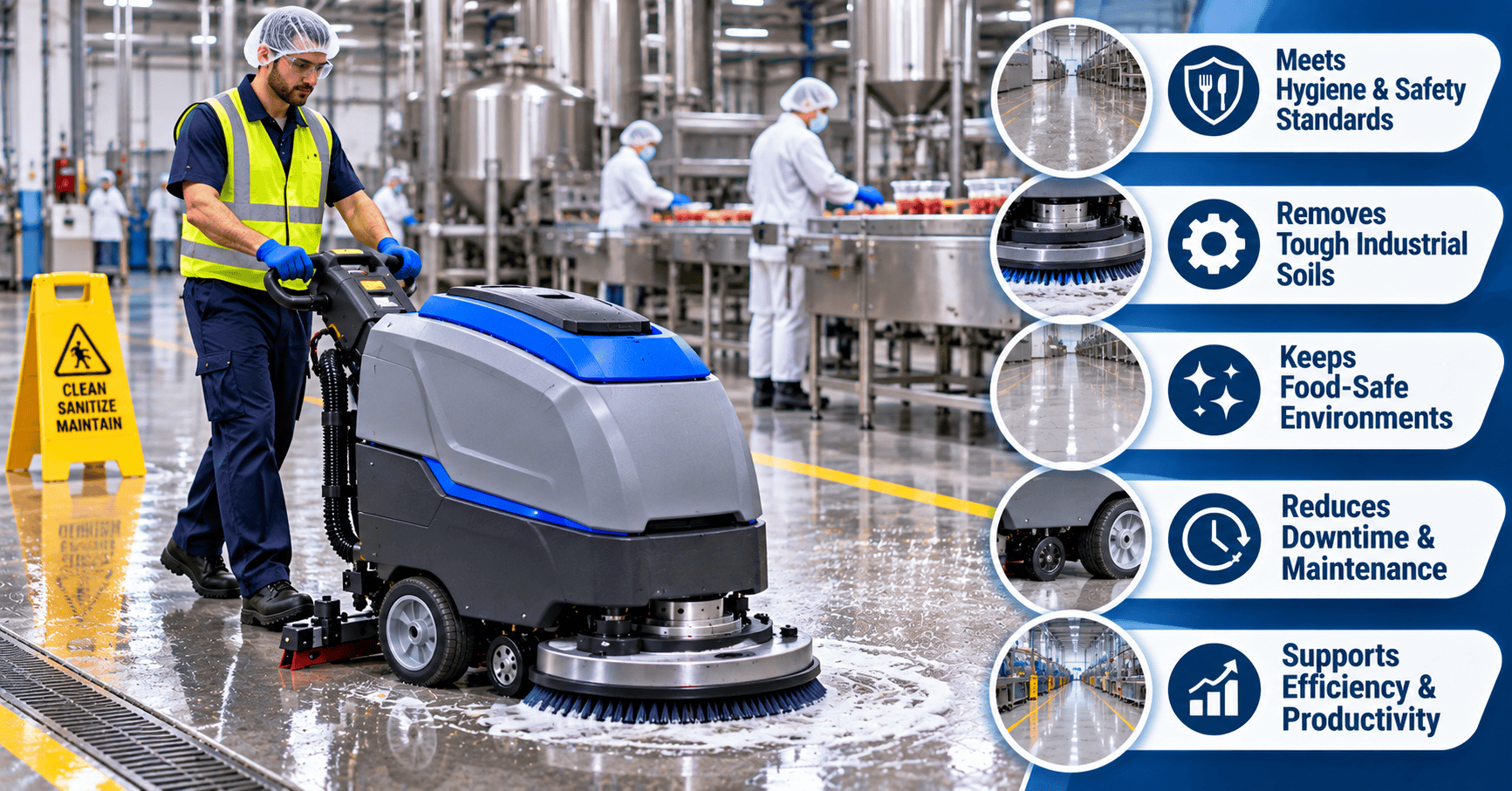
How to Maintain Industrial Floor Scrubbers for Long Term Performance and Reliability
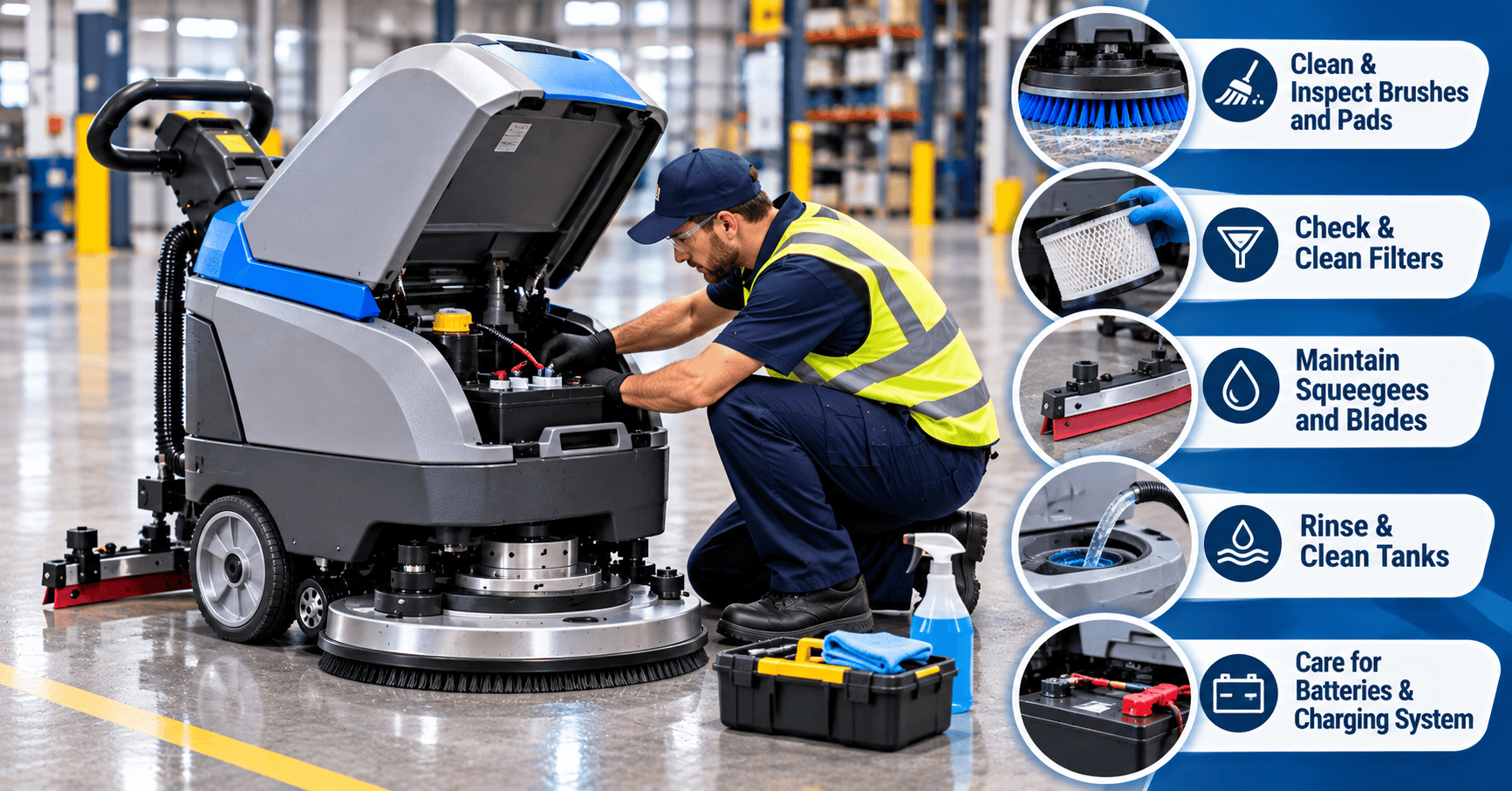
Industrial floor scrubbers play an important role in maintaining clean, safe, and professional facilities. From warehouses and manufacturing plants to hospitals, schools, and retail spaces, these machines help remove stubborn dirt, grease, and everyday buildup while reducing manual cleaning time.
However, even a high quality floor scrubber needs regular care to deliver consistent results. Proper industrial floor scrubber maintenance is about more than keeping equipment clean.
It helps extend machine life, prevent unexpected breakdowns, improve cleaning efficiency, and control operating costs. With a consistent maintenance routine, businesses can protect their investment and keep daily cleaning operations running smoothly.
Why Regular Industrial Floor Scrubber Maintenance Matters
Industrial floor scrubbers operate in demanding environments where dust, moisture, chemical residue, and heavy use can gradually affect performance. Without proper maintenance, brushes may lose their effectiveness, suction can weaken, and batteries may struggle to hold a charge.
Small issues can quickly become expensive repairs when ignored. Regular inspections help identify worn components before they cause larger problems. They also support better cleaning results, reduce equipment downtime, and help maintain safer floors by ensuring the machine collects dirty water effectively.
For facility managers, preventive maintenance is a practical way to improve equipment reliability while getting more value from existing cleaning equipment.
1. Clean the Machine After Every Use
One of the simplest ways to maintain an industrial floor scrubber is to clean it thoroughly after each cleaning session. Leaving dirty water, detergent residue, and debris inside the machine can cause unpleasant odors, blockages, and premature wear.
Start by emptying both the recovery tank and the solution tank. Rinse them with clean water to remove leftover dirt and cleaning chemicals. Pay particular attention to the recovery tank, where collected soil and wastewater can accumulate quickly.
Check the tank openings, hoses, and drain connections for obstructions. Wipe down the machine’s exterior and remove any debris around the wheels and cleaning head. Allow tanks to dry with their lids open when the manufacturer’s instructions permit. This simple habit helps prevent odors and keeps the machine ready for its next shift.
2. Inspect Brushes, Pads, and Squeegees
Brushes, cleaning pads, and squeegees have a direct impact on floor scrubber performance. Worn brushes may struggle to remove stubborn dirt, while damaged or dirty pads can leave floors looking uneven.
Inspect brushes and pads regularly for excessive wear, trapped debris, and damage. Clean them after use and replace them when they no longer deliver satisfactory cleaning results. Always choose the correct brush or pad for the floor surface and cleaning application.
Squeegees deserve equal attention because they collect wastewater from the floor. Check the blades for cracks, uneven edges, and signs of hardening. Clean away debris that could interfere with water recovery, and adjust or replace the blades when necessary.
If a scrubber leaves streaks or water behind, worn squeegee blades, blocked vacuum hoses, or poor blade adjustment may be responsible.
3. Follow the Correct Battery Maintenance Routine
For battery powered industrial floor scrubbers, battery care is essential for reliable daily operation. Poor charging habits can reduce battery capacity, shorten service life, and interrupt cleaning schedules.
Recharge the batteries according to the manufacturer’s recommendations, using the correct charger for the battery type. Avoid allowing batteries to remain deeply discharged for extended periods. Inspect charging connections and cables for visible damage, loose fittings, or corrosion.
Lead acid batteries require additional attention, including checking electrolyte levels when applicable and adding distilled water according to the manufacturer’s instructions. Water should generally be added after charging unless the manufacturer specifies otherwise.
Lithium ion batteries have different requirements and should not be serviced like traditional flooded batteries. Always follow the machine’s battery safety procedures. Keeping charging areas clean, dry, and properly ventilated where required can also help support safe operation.
4. Use Right Cleaning Chemicals
The cleaning solution you use can affect both floor results and machine longevity. Products that are too concentrated may leave residue, create excessive foam, or contribute to buildup inside the recovery system.
Choose cleaning chemicals approved for your scrubber and suitable for the floor material. Follow the recommended dilution ratios rather than assuming stronger solutions will produce better results.
Excessive foam can interfere with vacuum recovery and may damage components if it enters areas where it should not. Avoid mixing chemicals unless the product manufacturer specifically permits it.
Using the correct solution helps maintain consistent cleaning performance while reducing unnecessary strain on the machine.
5. Check Filters, Hoses, and Vacuum Components
A floor scrubber depends on effective water recovery to leave surfaces clean and relatively dry. Blocked filters, leaking hoses, and restricted airflow can reduce suction and affect cleaning quality.
Inspect vacuum hoses for cracks, loose connections, and obstructions. Clean filters as directed in the equipment manual, and replace damaged components when necessary. Check drain hoses and seals for leaks that could create messes or reduce operational efficiency.
Listen for unusual noises from the vacuum motor and pay attention to changes in suction. Addressing these warning signs early can prevent more serious problems and costly downtime.
7. Train Operators and Store Equipment Properly
Even well maintained equipment can develop problems when used incorrectly. Train operators to use the machine’s controls properly, select suitable cleaning settings, recognize warning indicators, and report unusual performance immediately.
Before each shift, encourage a quick inspection of the brushes, squeegees, tanks, cables, and wheels. Operators should also understand how to shut down the machine safely after use.
Store the scrubber in a clean, dry, protected area. Follow the manufacturer’s guidance for battery charging, storage temperatures, and preparation during extended periods of inactivity. Proper storage reduces unnecessary exposure to moisture, dirt, and potential damage.
Conclusion
Maintaining industrial floor scrubbers for long term performance and reliability starts with consistent daily care. Cleaning tanks, inspecting brushes and squeegees, following proper battery charging procedures, and checking vacuum components can make a meaningful difference in equipment performance.
When these habits are supported by scheduled professional servicing and operator training, businesses can reduce downtime, improve cleaning results, and extend the useful life of their machines.
For facilities investing in dependable commercial cleaning equipment, choosing suitable machines and maintaining them correctly go hand in hand. A proactive approach helps keep industrial floor scrubbers working efficiently, shift after shift.
Frequently Asked Questions
1. How often should an industrial floor scrubber be maintained?
Basic cleaning and visual inspections should be performed after every use. Brushes, squeegees, filters, and batteries should be checked regularly, while professional servicing should follow the manufacturer’s recommended schedule and operating hours.
2. What is the most common cause of poor floor scrubber performance?
Common causes include worn brushes, damaged squeegee blades, blocked vacuum hoses, dirty filters, incorrect cleaning chemical concentrations, and neglected batteries. Regular inspections help identify these issues early.
3. How can I extend the battery life of an industrial floor scrubber?
Use the correct charger, follow the recommended charging routine, avoid prolonged deep discharge, and inspect connections regularly. For batteries that require water maintenance, follow the manufacturer’s instructions carefully.
4. When should floor scrubber brushes and squeegees be replaced?
Replace them when they show significant wear, damage, or reduced cleaning effectiveness. If the machine leaves streaks, struggles to remove dirt, or fails to collect wastewater properly, inspect these components and replace them when necessary.