How to Select Commercial Floor Cleaning Equipment for Different Flooring Materials
Keeping commercial floors clean is about more than maintaining appearances. The right cleaning routine helps protect flooring, improve workplace safety, and create a welcoming environment for employees, customers, and visitors.
However, every flooring material has different cleaning requirements. Using the wrong machine, brush, or cleaning solution can damage the surface and increase maintenance costs.
Choosing the right commercial floor cleaning equipment starts with understanding your flooring material, the type of dirt you encounter, and how frequently the area needs cleaning. Whether you manage a warehouse, retail store, office building, school, or healthcare facility, selecting suitable equipment can make daily cleaning faster and more effective.
Why Flooring Material Matters When Choosing Cleaning Equipment
Not every floor responds well to the same cleaning method. Some surfaces can withstand regular machine scrubbing, while others require gentle cleaning and carefully controlled moisture.
Hard surfaces may need automatic floor scrubbers or buffers, whereas carpeted areas require commercial vacuums and carpet extraction machines. Before purchasing equipment, consider the floor’s texture, moisture sensitivity, finish, and level of foot traffic.
You should also evaluate the size of the cleaning area and the amount of dirt or debris your team handles daily. These factors help you select a machine that delivers reliable results without causing unnecessary wear.
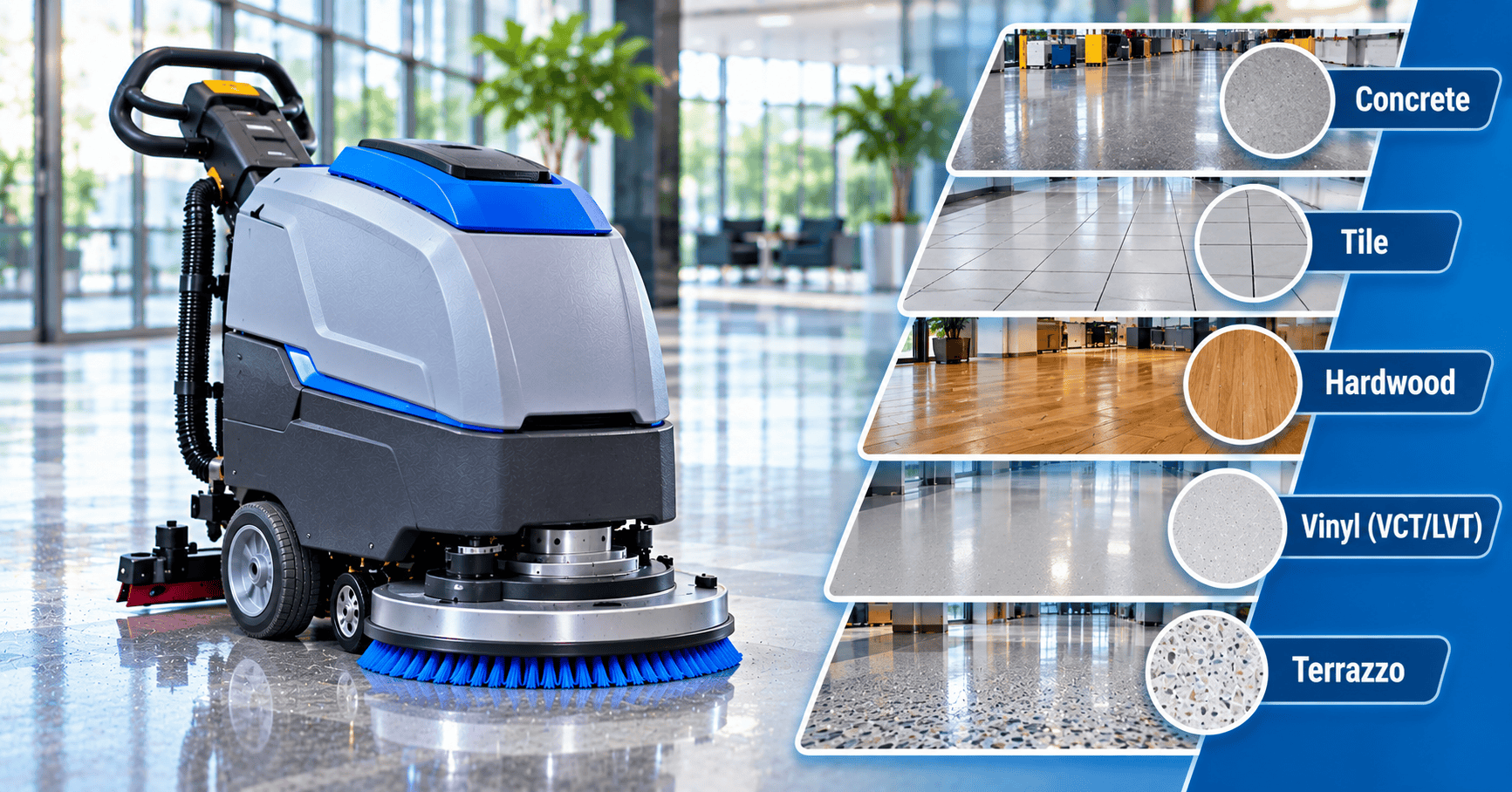
1. Commercial Floor Cleaning Equipment for Concrete Floors
Concrete floors are common in warehouses, manufacturing plants, distribution centers, and industrial facilities. Although concrete is durable, it can accumulate dust, oil, grease, and heavy dirt from equipment and foot traffic.
For large concrete areas, industrial floor sweepers are useful for collecting loose dust and debris before wet cleaning begins. Automatic floor scrubbers are suitable for removing stubborn dirt and surface buildup, especially on sealed concrete.
Choose equipment with brush pressure and cleaning settings appropriate for the floor’s finish. Sealed concrete may require a different approach than unfinished concrete. In industrial environments, selecting a machine with suitable tank capacity and cleaning width can also reduce interruptions and improve productivity.
2. Equipment for Tile and Grout Floors
Tile flooring is frequently found in schools, hospitals, restaurants, offices, and retail spaces. While glazed tiles are generally easy to clean, grout lines can collect dirt, moisture, and residue that ordinary mopping may not remove effectively.
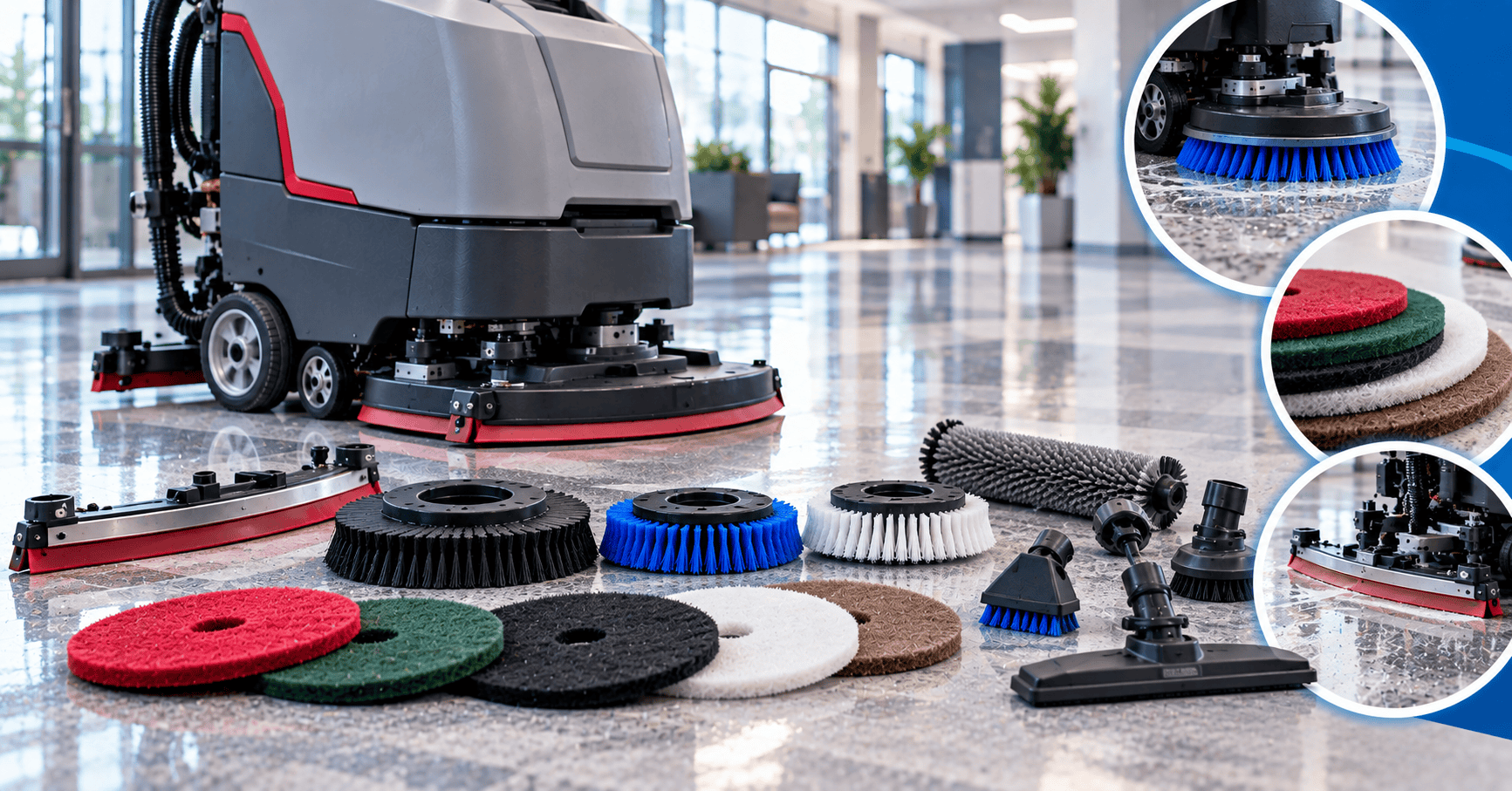
An automatic floor scrubber with cylindrical brushes can be a practical option for textured tile and grout lines, provided the brush and pressure are suitable for the surface. Disc scrubbers with appropriate brushes or pads can also work well on smoother tile floors.
Avoid overly aggressive pads that could scratch the tile or damage the grout. Always choose a cleaning solution compatible with the tile material and grout type. Proper water recovery is equally important because excess moisture can create slippery conditions and affect vulnerable grout or surrounding materials.
3. Choosing Equipment for Vinyl and LVT Flooring
Vinyl and luxury vinyl tile flooring are popular in commercial offices, healthcare facilities, schools, and retail environments because they are relatively easy to maintain. However, abrasive cleaning methods and excessive heat can damage certain finishes.
A commercial floor scrubber with a soft brush or manufacturer approved cleaning pad is often a suitable choice for routine maintenance. For larger areas, an automatic scrubber can remove everyday dirt while recovering dirty water in a single pass.
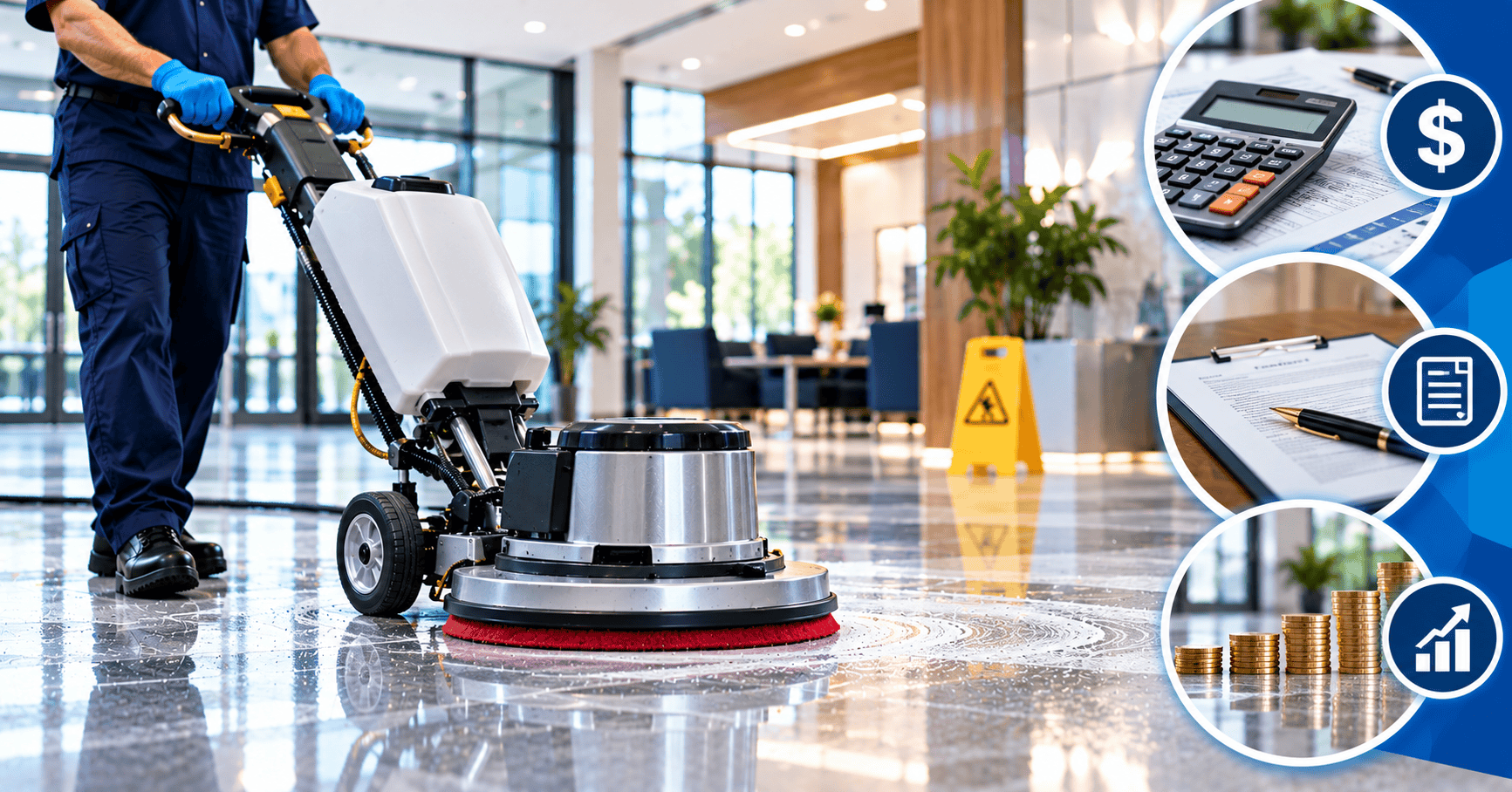
Floor buffers may also be appropriate when the flooring manufacturer’s maintenance instructions permit polishing or finish restoration. Not every vinyl floor requires buffing, so check whether the surface has a protective coating and which maintenance methods are recommended.
4. Equipment for Hardwood and Laminate Floors
Hardwood and laminate flooring require special care because excessive moisture can cause swelling, warping, or finish damage. This makes conventional wet scrubbing unsuitable for many of these surfaces.
A commercial vacuum with appropriate floor attachments is an excellent choice for removing dust, grit, and debris without scratching the finish. Microfiber dust mops can also support everyday maintenance.
For hardwood floors, a low speed floor buffer may be suitable when the floor finish and maintenance program allow it. Laminate generally requires a more cautious approach, with minimal moisture and no aggressive polishing unless specifically approved by the manufacturer.
Always check the flooring care instructions before using powered equipment or liquid cleaning solutions.
5. Equipment for Commercial Carpeted Floors
Carpet is common in offices, hotels, conference rooms, and other commercial spaces where comfort and noise reduction matter. Unlike hard flooring, carpet fibers trap dust, allergens, and soil deep within their structure.
Commercial vacuums are essential for routine cleaning because they remove loose dirt before it becomes embedded in the fibers. For deeper cleaning, commercial carpet extractors apply cleaning solutions and recover dirty water from the carpet.
The right extractor depends on carpet construction, soil levels, and drying requirements. Facilities with heavy foot traffic may benefit from more frequent vacuuming and scheduled deep cleaning. Always follow the carpet manufacturer’s recommendations to avoid overwetting, discoloration, or damage to the backing.
Make Right Choice for Your Facility
Selecting commercial floor cleaning equipment becomes easier when you match the machine to the flooring material and cleaning demands of your facility. Concrete often benefits from sweeping and scrubbing, tile may require suitable brushes for grout, vinyl needs finish friendly cleaning, hardwood requires minimal moisture, and carpet generally needs vacuuming and periodic extraction.
At Lifetime Equipment, businesses can explore professional floor scrubbers, sweepers, buffers, carpet cleaners, and other cleaning solutions for different facility requirements. Taking time to assess your flooring, cleaning schedule, and budget helps you invest in equipment that supports consistent results and long term floor care.
Frequently Asked Questions
1. What is the best commercial floor cleaning machine?
The best machine depends on your flooring material, facility size, and cleaning requirements. Automatic scrubbers suit many hard floors, sweepers collect loose debris, and carpet extractors provide deeper carpet cleaning.
2. Can one floor scrubber clean every flooring material?
No. Some floors are sensitive to moisture, abrasion, or aggressive cleaning chemicals. Always check the manufacturer’s recommendations and choose suitable brushes, pads, and cleaning settings.
3. How often should commercial floors be cleaned?
Cleaning frequency depends on foot traffic, the type of business, and the amount of dirt generated. Busy entrances and industrial floors may need daily attention, while periodic deep cleaning helps maintain floor appearance and hygiene.
4. Should I buy new or reconditioned floor cleaning equipment?
Both options can be worthwhile. New equipment may offer the latest features, while reconditioned machines can provide value for budget conscious facilities. Compare the machine’s condition, warranty, maintenance history, parts availability, and expected operating costs before deciding.