Commercial floor cleaning machines play an important role in maintaining clean, safe, and professional environments. From warehouses and manufacturing facilities to hospitals, shopping centers, and office buildings, these machines help businesses maintain spotless floors while reducing manual labor and saving time.
However, like any piece of commercial equipment, floor scrubbers, sweepers, buffers, and carpet cleaners experience wear and tear over time. Even well maintained machines can develop problems that affect their cleaning performance, efficiency, and reliability.
The challenge is knowing when a machine needs a simple repair and when replacing it is the smarter investment. Ignoring early warning signs can lead to unexpected breakdowns, higher maintenance expenses, and interruptions to daily operations.
Here are the top signs that your commercial floor cleaning machine may need repair or replacement.
1. Your Machine Is Not Cleaning as Effectively as Before
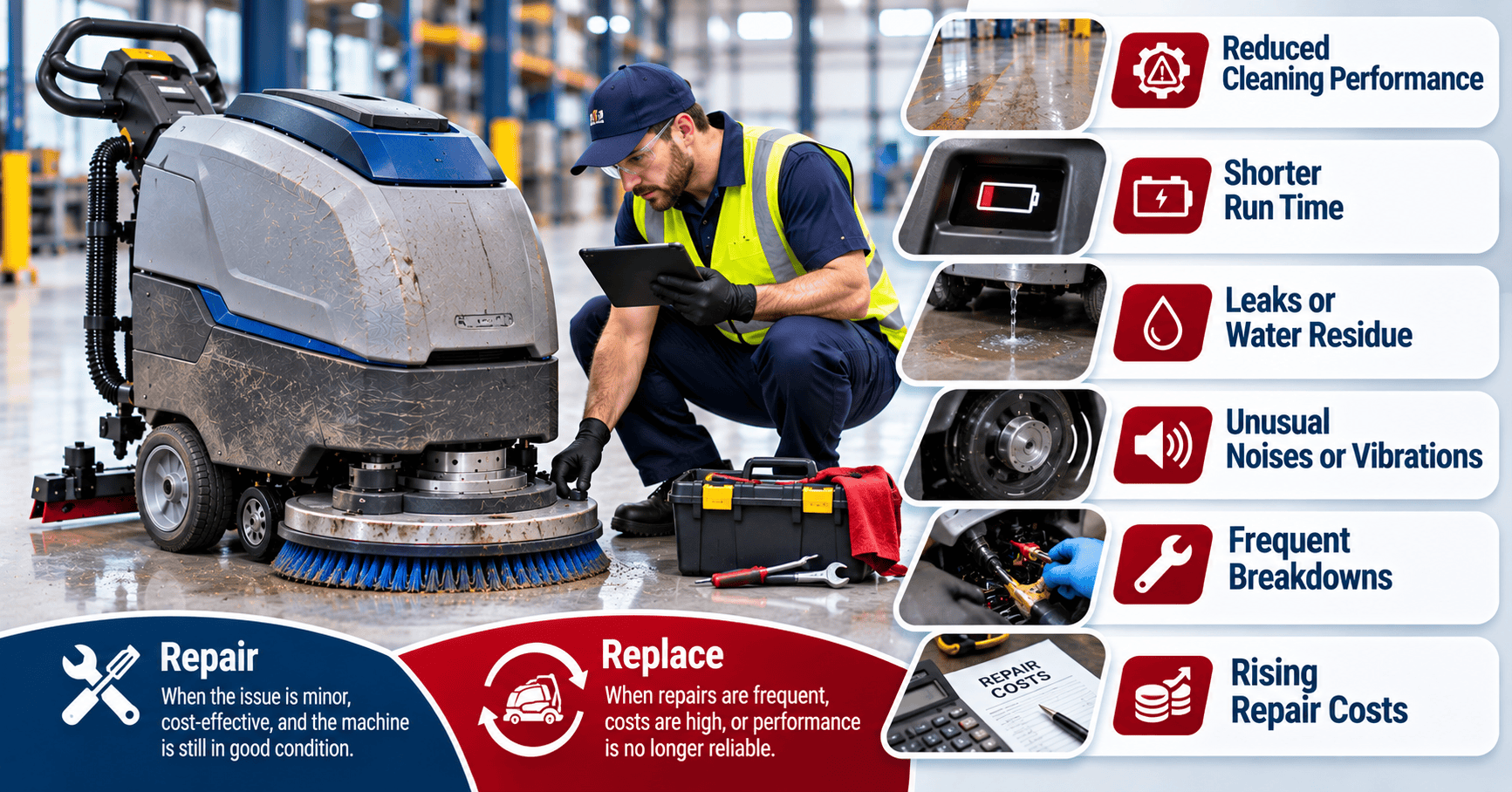
One of the most noticeable signs of trouble is a decline in cleaning performance. If your commercial floor scrubber leaves behind dirt, streaks, water, or cleaning solution residue, something may not be working correctly.
Several issues can contribute to poor cleaning results, including worn brushes, damaged squeegees, clogged filters, weak suction, or problems with the water delivery system.
Start by inspecting the brushes, pads, and squeegee blades. These components experience regular contact with flooring surfaces and naturally wear down over time. Replacing worn parts may restore the machine’s performance.
However, if cleaning quality continues to decline despite regular maintenance and replacement of essential components, the machine may have deeper mechanical or electrical problems.
2. Unusual Noises or Excessive Vibrations
Commercial cleaning equipment should operate relatively smoothly. Grinding, squealing, rattling, or unusual vibrations should never be ignored. These sounds can indicate loose components, worn bearings, damaged motors, misaligned brushes, or problems with the drive system.
For example, excessive vibration in a floor buffer may result from an uneven pad or a damaged motor component. Similarly, unusual grinding noises from a floor scrubber could indicate mechanical wear.
Stop using the equipment if you notice severe or sudden noises. Continuing to operate a damaged machine could make the problem worse and potentially create safety risks for operators.
A professional inspection can help determine whether a repair is sufficient or whether replacement makes more financial sense.
3. Frequent Breakdowns and Increasing Repair Costs
Every commercial floor cleaning machine requires occasional maintenance. However, frequent breakdowns are a warning that something more serious may be happening.
If your equipment constantly needs repairs, requires replacement components, or spends more time out of service than actually cleaning, it may no longer be a dependable investment.
Consider the total cost of ownership rather than looking at individual repair bills. Add up maintenance expenses, replacement parts, labor costs, and the productivity lost whenever the machine stops working.
If these expenses continue increasing, purchasing a newer commercial floor cleaning machine could be more economical over time. A reliable machine should support your cleaning operations, not become a constant source of unexpected expenses.
4. Battery Life Is Getting Shorter
Battery performance is particularly important for businesses using cordless floor scrubbers and other battery powered cleaning equipment. If your machine no longer holds a charge, takes unusually long to recharge, or stops working before completing its normal cleaning route, the battery may be deteriorating.
Other possible causes include faulty charging equipment, damaged connections, or electrical system problems. Before replacing the entire machine, have the battery and charging system inspected.
In many cases, replacing the battery can restore normal operation. However, if an older machine also has motor problems, worn components, and outdated technology, investing in a newer model may offer better long term value.
5. Replacement Parts Are Becoming Difficult to Find
As commercial floor cleaning machines age, finding compatible replacement parts can become increasingly challenging. Manufacturers may discontinue older models, limit component availability, or introduce newer systems that use different parts.
When essential components become difficult or expensive to source, keeping an older machine operational can become frustrating and costly. If your equipment is still in good condition, replacing individual components may remain a reasonable option.
However, when multiple parts need attention and availability is limited, replacing the machine may be the better decision. Choosing equipment from established brands with accessible replacement parts can also make future maintenance easier.
Keep Your Cleaning Operations Running With Right Equipment
Recognizing the warning signs of equipment failure can save your business money and prevent unnecessary downtime. Regular inspections, timely repairs, and proper maintenance all contribute to a longer equipment lifespan.
When replacement becomes necessary, choosing dependable commercial floor cleaning equipment is equally important.
At Lifetime Equipment, businesses can explore professional grade floor scrubbers, floor sweepers, floor buffers, carpet cleaners, vacuums, and replacement parts from established brands such as Tennant, Clarke, Advance, Nobles, and Minuteman.
Whether you need replacement parts or a more capable cleaning machine, selecting equipment that matches your facility’s requirements can make a meaningful difference in daily operations.
Investing in the right equipment today helps keep your floors cleaner and your business running smoothly tomorrow.
Frequently Asked Questions
1. How Often Should Commercial Floor Cleaning Machines Be Serviced?
Commercial floor cleaning machines should receive basic cleaning and inspection after regular use. More detailed preventive maintenance should follow the manufacturer’s recommended service schedule. High usage equipment may require more frequent professional inspections.
2. Is It Better to Repair or Replace a Commercial Floor Scrubber?
It depends on the machine’s age, condition, repair expenses, and overall performance. Minor issues can often be resolved with replacement parts. However, frequent breakdowns, major mechanical failures, and rising maintenance costs may make replacement a better investment.
3. What Is the Average Lifespan of a Commercial Floor Cleaning Machine?
The lifespan varies depending on the manufacturer, machine quality, operating hours, maintenance routine, and working conditions. Machines used heavily in industrial environments may experience more wear than equipment used occasionally in smaller commercial spaces.
4. What Are the Most Common Signs of a Failing Floor Scrubber?
Common warning signs include poor cleaning results, unusual noises, reduced battery life, water leaks, weak suction, excessive vibration, and frequent breakdowns. Addressing these problems early can help prevent more expensive damage.