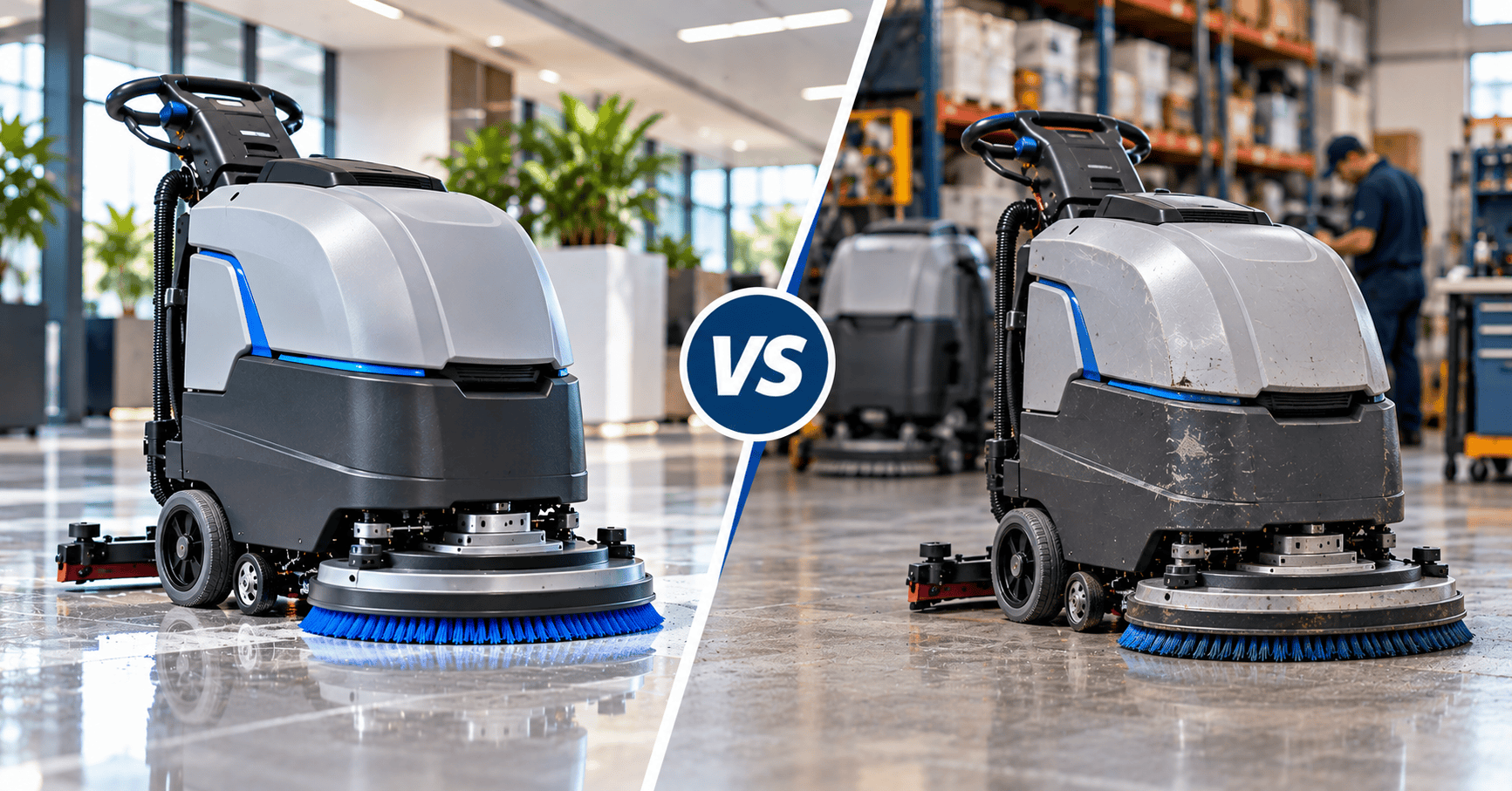
Commercial Floor Cleaning Equipment for Healthcare Facilities: Key Features to Consider
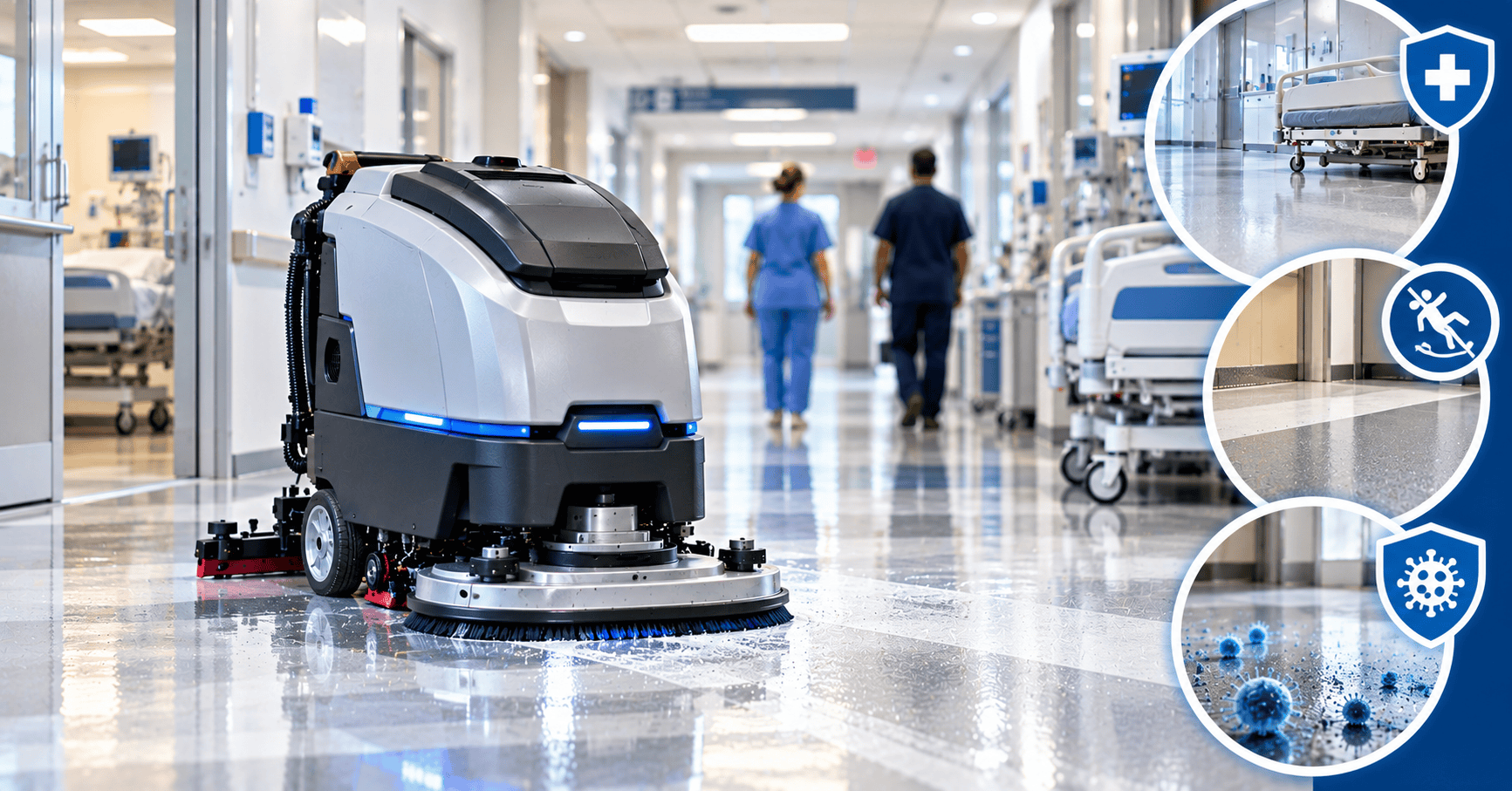
Keeping healthcare facilities clean is about much more than maintaining a polished appearance. Hospitals, clinics, nursing homes, rehabilitation centers, and other healthcare environments deal with heavy foot traffic, frequent spills, strict cleaning routines, and patients who may be especially sensitive to their surroundings. That makes choosing the right commercial floor cleaning equipment an important part of an effective facility maintenance strategy.
The right floor cleaning machine can help cleaning teams work more efficiently while supporting safer, cleaner, and more comfortable environments. However, healthcare facilities have specific needs that should be considered before investing in commercial cleaning equipment.
1. Effective Cleaning Performance
Healthcare floors need consistent and thorough cleaning. Dirt, dust, spills, and other debris can accumulate quickly in hallways, patient rooms, waiting areas, cafeterias, and common spaces. A quality commercial floor scrubber should provide strong cleaning performance without requiring multiple passes over the same area.
Look for equipment with dependable brush or pad systems, effective water recovery, and adjustable cleaning settings. Different flooring materials may also require different cleaning methods.
Smooth surfaces can often benefit from pads, while textured surfaces may require brushes designed to reach into uneven areas. Selecting equipment that matches the floor type can improve cleaning results and help protect the surface over time.
2. Low Noise Operation
Noise is an important consideration in healthcare environments. Patients may be resting, recovering, receiving treatment, or sleeping, so loud cleaning equipment can create unnecessary disruption.
When comparing commercial floor cleaning equipment, consider machines designed for quieter operation. Battery powered scrubbers can be particularly useful because they eliminate the need for loud fuel powered engines in indoor areas.
A quieter machine allows cleaning staff to maintain floors without creating excessive disturbance. This can be especially valuable in hospitals, nursing homes, and other facilities where cleaning often needs to happen throughout the day.
3. Maneuverability in Busy Spaces
Healthcare facilities are rarely wide open spaces. Cleaning crews may need to work around beds, chairs, medical equipment, carts, elevators, doorways, and people moving through hallways.
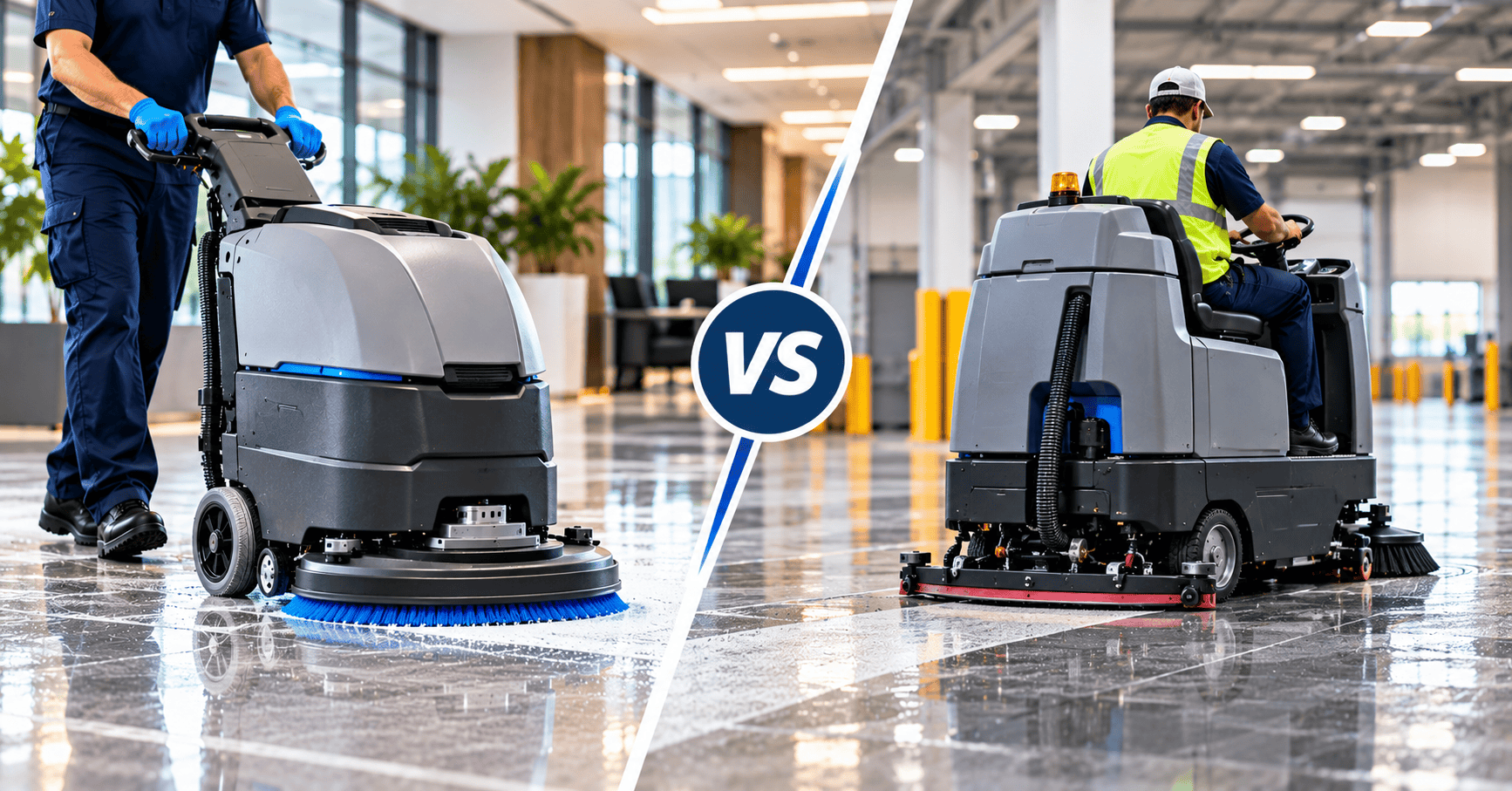
For these environments, maneuverability matters just as much as cleaning power. A compact walk behind floor scrubber may be ideal for smaller or crowded areas, while a ride on floor scrubber can make more sense for larger facilities with extensive floor space.
Before purchasing a machine, measure doorways, corridors, elevators, storage areas, and other restricted spaces. A machine that fits comfortably into the facility will be easier for operators to use and more practical for everyday cleaning.
4. Excellent Water Recovery
Wet floors can create slip and fall concerns, especially in busy healthcare environments. For this reason, effective water recovery is an important feature to look for when selecting a commercial floor scrubber.
A quality scrubber should remove dirty water efficiently as it moves across the floor. Strong squeegee performance and effective suction can help leave floors cleaner and drier after cleaning.
The goal is not simply to scrub the floor. It is to complete the cleaning process while minimizing leftover moisture that could interfere with normal facility operations.
5. Battery Life and Charging
Battery powered floor cleaning equipment is popular in healthcare settings because it provides freedom of movement without the need for electrical cords during operation. When evaluating battery powered equipment, consider expected cleaning time, charging requirements, battery type, and how frequently the machine will be used.
A facility with a large cleaning schedule may need equipment capable of operating for extended periods between charges. It is also important to establish a regular battery maintenance routine. Proper care can help maximize battery life and reduce unexpected downtime.
6. Easy Maintenance and Service
Healthcare cleaning equipment is used regularly, sometimes multiple times every day. Even a durable machine will eventually need routine maintenance and replacement parts.
Look for equipment that makes common maintenance tasks straightforward. Brushes, pads, squeegees, filters, batteries, and other wear components should be accessible and easy to inspect or replace.
Reliable service support is equally important. If a machine breaks down, extended downtime can put additional pressure on an already busy cleaning team. Choosing equipment from a supplier that offers parts, service support, and expert guidance can make ownership easier over the long term.
7. Operator Friendly Controls
Commercial floor cleaning equipment should be powerful, but it should also be easy for cleaning staff to operate. Simple controls can help reduce training time and make it easier for operators to use the machine correctly.
Features such as adjustable cleaning pressure, solution control, easy steering, and clear battery indicators can make a noticeable difference during daily use. An operator friendly machine can also help improve consistency because staff members are more likely to use equipment correctly when its controls are straightforward.
Choosing the Right Commercial Floor Cleaning Equipment
There is no single machine that is perfect for every healthcare facility. The best choice depends on the size of the facility, flooring types, cleaning schedule, available storage, traffic levels, and the areas that need to be cleaned.
Walk behind scrubbers can be practical for tighter spaces, while ride on machines can help cleaning teams cover larger areas more efficiently. Sweepers, vacuums, buffers, and other equipment may also be useful depending on the facility’s specific requirements.
Before making a purchase, consider the total cost of ownership rather than focusing only on the initial price. Labor savings, maintenance requirements, parts availability, battery performance, and equipment lifespan can all affect the long term value of a commercial cleaning machine.
Frequently Asked Questions
What type of floor scrubber is best for a hospital?
The best floor scrubber depends on the hospital’s size, floor layout, flooring materials, and cleaning requirements. Walk behind machines can work well in smaller or crowded areas, while ride on scrubbers may be more efficient for larger floor areas.
Are battery powered floor scrubbers suitable for healthcare facilities?
Yes. Battery powered floor scrubbers can be well suited to healthcare facilities because they provide freedom of movement and can operate indoors without the emissions associated with fuel powered equipment. Noise level and battery capacity should still be considered before choosing a machine.
Why is water recovery important in healthcare floor cleaning?
Effective water recovery helps remove dirty solutions from the floor after scrubbing. This can help floors dry faster and reduce the potential for slip hazards in busy areas.
How often should commercial floor cleaning equipment be maintained?
Maintenance frequency depends on the machine and how heavily it is used. Healthcare facilities should follow the manufacturer’s maintenance recommendations and regularly inspect components such as brushes, pads, squeegees, filters, and batteries.
Final Thoughts
Choosing commercial floor cleaning equipment for a healthcare facility requires careful consideration. Cleaning performance, noise levels, maneuverability, water recovery, battery life, maintenance, and operator comfort can all influence how effectively a machine performs in a real healthcare environment.
The right equipment can make daily cleaning more efficient while helping facility teams maintain cleaner and safer floors. By evaluating the facility’s actual needs before purchasing, healthcare managers can invest in equipment that delivers practical value for years to come.