How to Choose a Commercial Floor Sweeper for Large Indoor and Outdoor Areas
Keeping a large commercial space clean is not as simple as picking up a broom and getting to work. Warehouses, parking areas, manufacturing facilities, retail spaces, sidewalks, and other large properties can collect dust, dirt, leaves, packaging materials, and other debris throughout the day. Cleaning these areas manually can take valuable time and require a lot of physical effort.
That is where a commercial floor sweeper can make a major difference. The right machine can help your cleaning team cover ground, reduce manual labor, and maintain a cleaner facility. But with so many commercial floor sweepers available, how do you know which one is right for your facility? Here are the most important factors to consider.
Consider the Size of Your Cleaning Area
The first thing to look at is the size of the area you need to clean. A small walk behind sweeper may be practical for limited spaces, but large warehouses, distribution centers, parking areas, and industrial facilities often require a machine designed to cover more ground efficiently.
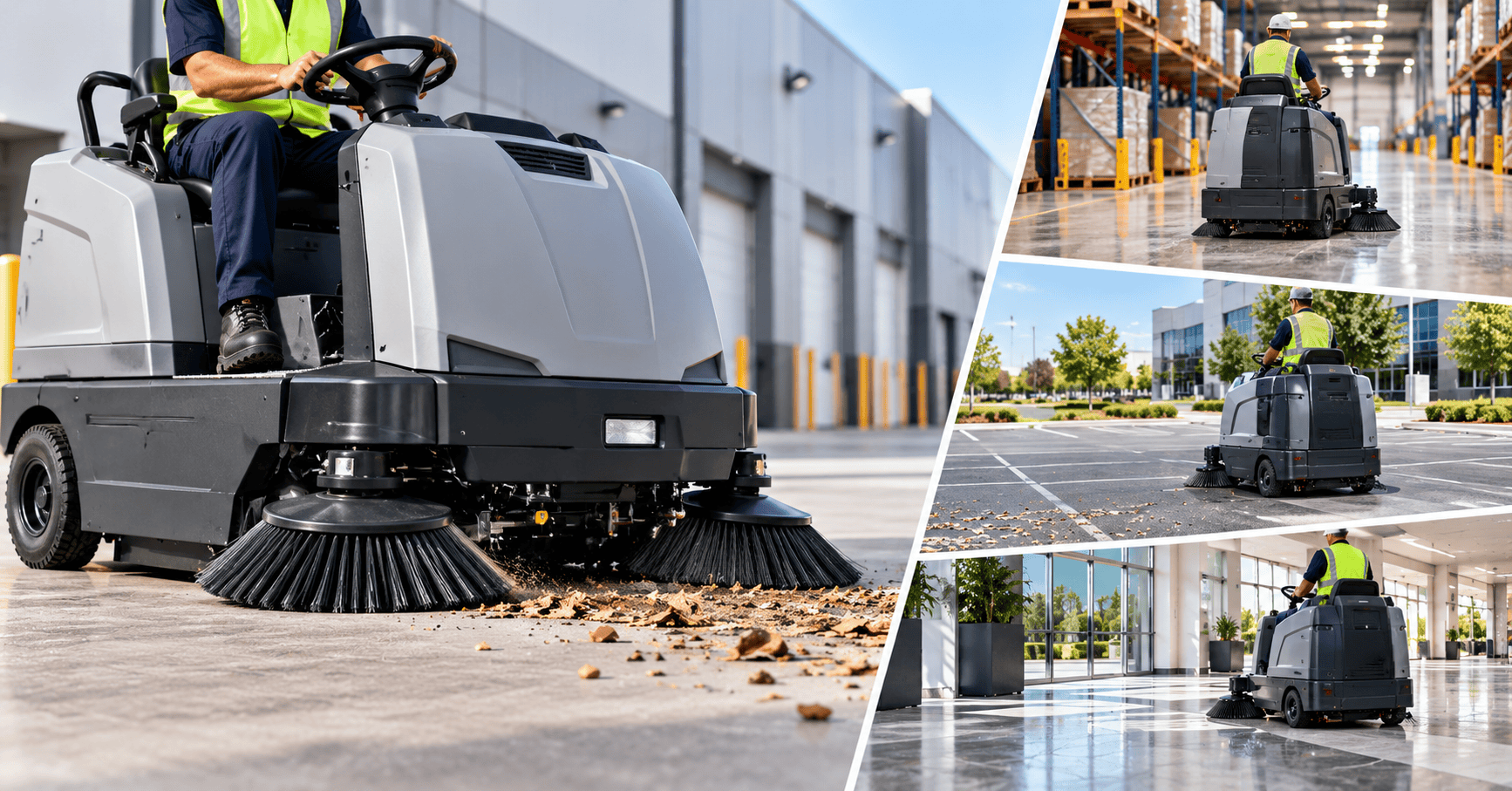
A wider cleaning path can help you clean more square footage in less time. For very large facilities, a ride on floor sweeper can be worth considering because the operator can cover extensive areas without the physical strain associated with manually pushing equipment.
Before purchasing, measure the areas you need to clean and estimate how frequently they need to be swept. This will give you a better idea of the machine size and productivity level you need.
Choose Between Walk Behind and Ride On Sweepers
Commercial floor sweepers generally fall into two broad categories: walk behind and ride on machines. Walk behind sweepers are useful when you need maneuverability and access to tighter spaces. They can work well in warehouses, workshops, retail environments, hallways, sidewalks, and other areas where a larger machine may be difficult to operate.
Ride on sweepers are designed with productivity in mind. If your facility covers a large amount of floor space, a ride on model can allow an operator to clean more efficiently while reducing physical effort. The additional productivity can also be important when cleaning needs to be completed within a limited maintenance window.
Your facility layout should ultimately determine which design makes sense. Consider aisles, doorways, corners, storage areas, loading zones, and other obstacles before choosing a machine.
Think About Indoor and Outdoor Cleaning Needs
Not every commercial floor sweeper is suitable for every environment. If you need to clean both indoor and outdoor areas, look for a machine that can handle the types of debris commonly found in both locations.
Indoor facilities may deal with dust, paper, packaging materials, dirt, and production debris. Outdoor areas can introduce leaves, gravel, sand, and heavier debris.
For example, Lifetime Equipment offers sweepers designed for different applications, including compact manual sweepers that can be used both indoors and outdoors. One of the listed Tornado manual sweepers is designed for areas such as warehouses, workshops, retail shops, hallways, and sidewalks.
Understanding what you actually need to pick up will help prevent you from purchasing a machine that is either too limited or unnecessarily large for your application.
Check Maneuverability and Storage Requirements
A commercial floor sweeper needs to fit your facility, not just your cleaning budget.Check the narrowest doorway, aisle, passageway, and storage location the machine will need to use. Turning radius is also important if your facility contains tight corners or busy work areas.
Compact sweepers can be especially useful when storage space is limited. Some models are designed with features such as collapsible handles and compact dimensions, making them easier to move and store when they are not being used.
Look at Maintenance, Warranty, and Long Term Value
Price is important, but it should not be the only factor in your decision. A commercial floor sweeper is an investment, so consider the overall ownership experience. Look at how easily routine maintenance can be performed, how replacement parts are handled, and whether the manufacturer or supplier provides warranty support.
Lifetime Equipment carries a range of commercial floor sweepers from established manufacturers and also offers replacement parts, warranty coverage, financing options, and equipment support. These factors can become particularly important when a machine is used frequently in demanding commercial environments.
Choose the Sweeper Based on Your Facility
The right commercial floor sweeper depends on more than square footage. Your decision should take into account the size of the facility, type of debris, floor surface, cleaning frequency, indoor or outdoor application, available storage, and the amount of maneuverability required.
For smaller or more confined spaces, a compact walk behind sweeper may provide the flexibility you need. For extensive facilities where productivity is a priority, a larger ride on sweeper may be more suitable.
Lifetime Equipment currently offers a variety of walk behind and ride on floor sweepers, giving businesses options for different cleaning requirements. Taking the time to evaluate your facility before purchasing can help you choose equipment that performs effectively today and continues to provide value over time.
Frequently Asked Questions
What is the best commercial floor sweeper for a large warehouse?
The right sweeper depends on the warehouse layout, square footage, type of debris, aisle width, and cleaning frequency. Large facilities may benefit from ride on equipment because it can cover extensive areas efficiently.
Can commercial floor sweepers be used outdoors?
Yes. Certain commercial sweepers are designed for both indoor and outdoor applications. Always check the manufacturer’s specifications to make sure the model is appropriate for the surfaces and debris found at your facility.
Should I choose a walk behind or ride on floor sweeper?
Walk behind sweepers can be useful for smaller or confined areas where maneuverability matters. Ride on sweepers are generally worth considering when large areas need to be cleaned efficiently and regularly.
What should I consider before buying a commercial floor sweeper?
Consider your cleaning area, floor type, debris, cleaning path width, machine capacity, maneuverability, power source, maintenance requirements, and budget. It is also helpful to consider warranty and parts availability before making a final decision.