A Buyer’s Guide to Commercial Floor Scrubber Brushes, Pads, and Cleaning Attachments
Choosing the right accessories for a commercial floor scrubber can make a noticeable difference in cleaning performance, labor efficiency, and floor maintenance costs. Whether you manage a warehouse, hospital, retail store, school, or industrial facility, using the correct brushes, pads, and cleaning attachments helps achieve better results with less effort.
However, not every accessory works well on every floor. Surface type, soil level, cleaning frequency, and machine compatibility all influence which option will deliver the best results. This buyer’s guide explains how to choose commercial floor scrubber brushes, pads, and attachments for your facility.
Understanding Commercial Floor Scrubber Brushes
Floor scrubber brushes are designed to loosen dirt, remove stubborn residue, and clean surfaces that require mechanical scrubbing. They are particularly useful in facilities where floors experience heavy foot traffic, grease buildup, or frequent exposure to dust and debris.
Nylon and Polypropylene Brushes
Nylon brushes feature relatively soft bristles that work well for routine cleaning and general maintenance. They are a practical choice for surfaces that need regular scrubbing without aggressive abrasion.
Polypropylene brushes offer greater stiffness for many general purpose cleaning applications. They can help remove accumulated dirt from concrete, tile, and other durable surfaces while providing a balance between cleaning strength and surface protection.
Abrasive and Heavy Duty Brushes
For demanding industrial environments, abrasive brushes containing grit can provide additional cleaning power. These brushes are useful for tackling stubborn buildup, textured flooring, and heavily soiled surfaces.
The level of abrasiveness matters. A brush that works well on unfinished concrete could scratch or damage a sensitive floor finish. Always consider the flooring manufacturer’s recommendations before selecting an aggressive brush.
Choosing Between Floor Scrubber Brushes and Pads
One of the most common questions buyers ask is whether they should use a brush or a cleaning pad. The answer depends primarily on the floor surface and the cleaning task.
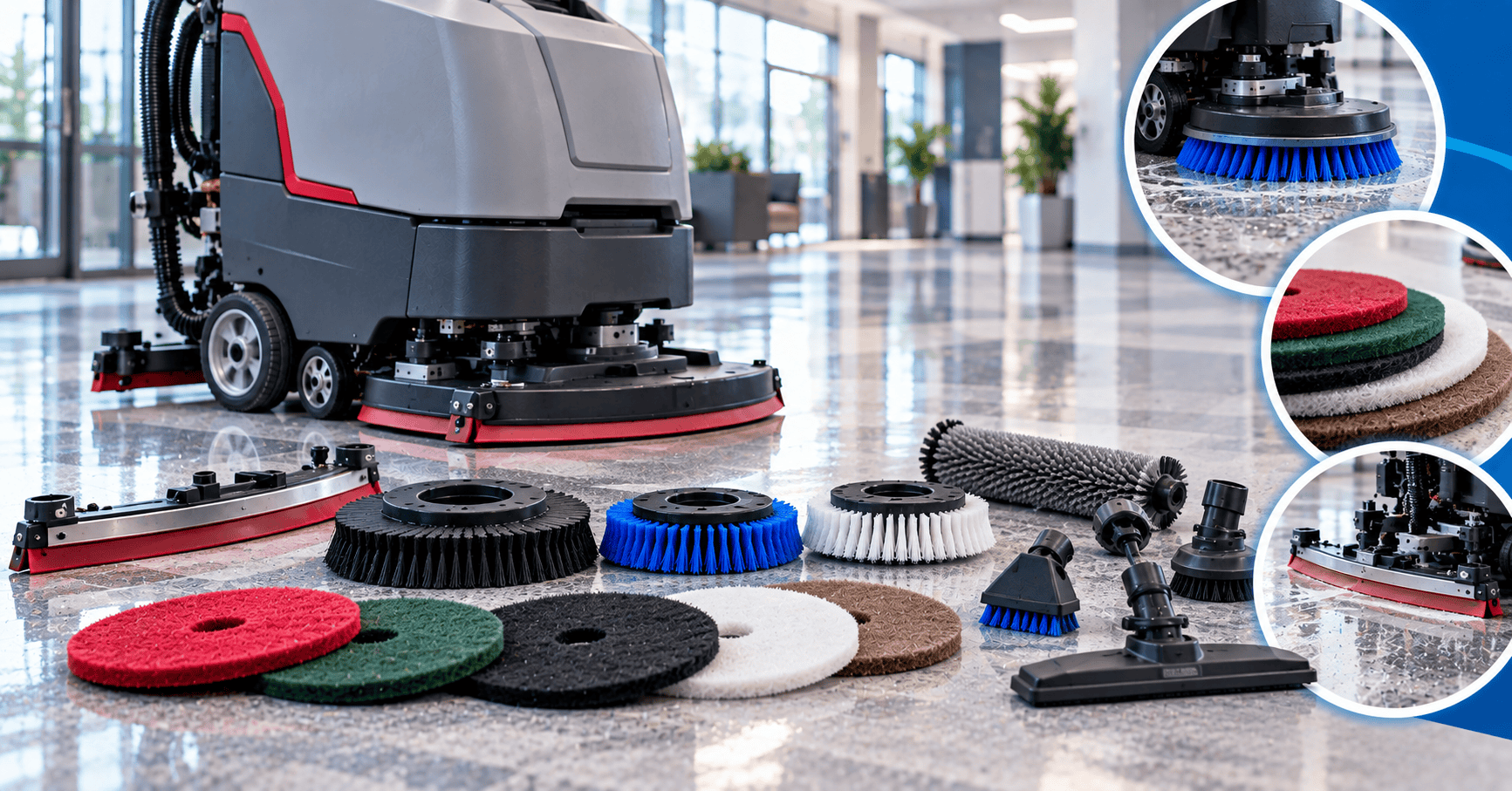
Brushes are generally better suited to uneven surfaces, textured flooring, and grout lines because their bristles can reach into grooves and irregular areas. Cylindrical brushes can also help collect small debris during cleaning when the machine is designed for that purpose.
Cleaning pads are often preferred for smooth, relatively even surfaces. They provide consistent contact with the floor and are available in different abrasive levels for routine cleaning, polishing, and finish removal.
For example, a facility with smooth finished flooring may benefit from suitable maintenance pads, while a warehouse with textured concrete may require a more durable scrubbing brush.
Before purchasing, confirm whether your machine uses a brush assembly or requires a separate pad driver. Not every scrubber accepts both accessories without the appropriate hardware.
How to Select the Right Cleaning Pad
Commercial floor cleaning pads are available in different materials and abrasive levels. Selecting the correct pad helps prevent unnecessary wear while improving cleaning results.
Daily Cleaning and Light Scrubbing
Less aggressive pads are suitable for routine maintenance and removing light soil from compatible floor finishes. They are useful in offices, retail spaces, and other environments where floors need frequent attention.
Deep Cleaning and Heavy Soil Removal
More abrasive pads can help remove stubborn marks, embedded dirt, and accumulated residue from suitable surfaces. However, excessive abrasion may damage protective coatings or change the floor’s appearance.
Stripping and Restoration
Specialized stripping pads are designed to remove old floor finish when preparing a compatible surface for refinishing. They should not be confused with everyday cleaning pads because their abrasive action is much stronger.
Always match the pad’s intended application to the flooring material and follow the manufacturer’s instructions for the machine, pad, and cleaning chemical.
Why Machine Compatibility Matters
Even a high quality brush or pad may perform poorly if it does not fit the scrubber correctly. Before ordering replacement accessories, identify your machine’s brand, model, brush diameter, pad size, and attachment mechanism.
Disk floor scrubbers typically use circular brushes or pads, while cylindrical machines use roller shaped brushes. These systems perform different cleaning functions and require compatible accessories.
You should also consider brush pressure, operating speed, and the machine’s intended cleaning method. Using an unsuitable accessory can reduce cleaning effectiveness, increase wear, or place unnecessary strain on machine components.
When replacing worn accessories, check the equipment manual or consult a knowledgeable supplier if you are unsure about specifications.
Essential Cleaning Attachments and Replacement Parts
Brushes and pads are only part of an effective floor care setup. Other components also influence cleaning performance and daily operating costs.
Pad drivers hold cleaning pads securely in position and allow compatible machines to use different pad types. Squeegee blades help collect dirty water from the floor, supporting effective water recovery and reducing slippery residue. Worn blades can leave streaks or standing water even when the brush or pad is working properly.
Replacement brush assemblies, mounting components, and other machine specific parts can also help keep equipment operating reliably. Selecting compatible parts is especially important for facilities that depend on their scrubbers every day.
When budgeting for maintenance, consider the cost of consumables alongside the expected service life of reusable accessories.
Make the Right Choice for Your Facility
The best commercial floor scrubber brushes, pads, and cleaning attachments are those that match your flooring, cleaning requirements, and equipment specifications. Soft brushes support routine maintenance, stiffer and abrasive brushes handle more demanding applications, and cleaning pads offer options for everything from daily care to floor restoration.
At Lifetime Equipment, selecting suitable floor cleaning equipment and replacement parts is an important step toward maintaining clean, safe, and professional facilities. By understanding your cleaning needs and checking compatibility before purchasing, you can improve cleaning results, manage maintenance expenses, and extend the useful life of your equipment.
Frequently Asked Questions
1. How often should commercial floor scrubber brushes be replaced?
Replacement frequency depends on cleaning conditions, usage hours, brush material, and maintenance practices. Inspect brushes regularly and replace them when the bristles become worn, damaged, or ineffective.
2. Are floor scrubber pads better than brushes?
Neither option is universally better. Pads are generally suitable for smooth surfaces, while brushes are often more effective on uneven floors and grout lines. The right choice depends on the surface and cleaning task.
3. Can I use any brush or pad with my floor scrubber?
No. Accessories must match the machine’s brand specifications, dimensions, mounting system, and cleaning requirements. Check the equipment manual before purchasing replacements.
4. How can I improve floor scrubber cleaning performance?
Use compatible accessories, select the correct cleaning solution, maintain suitable brush pressure, and inspect squeegee blades regularly. Cleaning brushes and pads after use also helps maintain consistent results.