Commercial Floor Buffer Maintenance: A Complete Guide
Commercial floor buffers are built to handle demanding cleaning and floor care jobs, but even the most reliable machine needs regular maintenance. A well maintained floor buffer delivers better results, operates more efficiently, and can remain dependable for years.
Whether you use a floor buffer in a school, hospital, retail store, warehouse, office building, or commercial facility, proper maintenance should be part of your regular cleaning routine. In this guide, we will cover the essential steps for commercial floor buffer maintenance and explain how simple care can help protect your equipment and your floors.
Why Commercial Floor Buffer Maintenance Matters
A commercial floor buffer works under significant stress. The motor, pad driver, electrical components, cord, wheels, and other parts are exposed to dust, debris, moisture, and continuous movement.
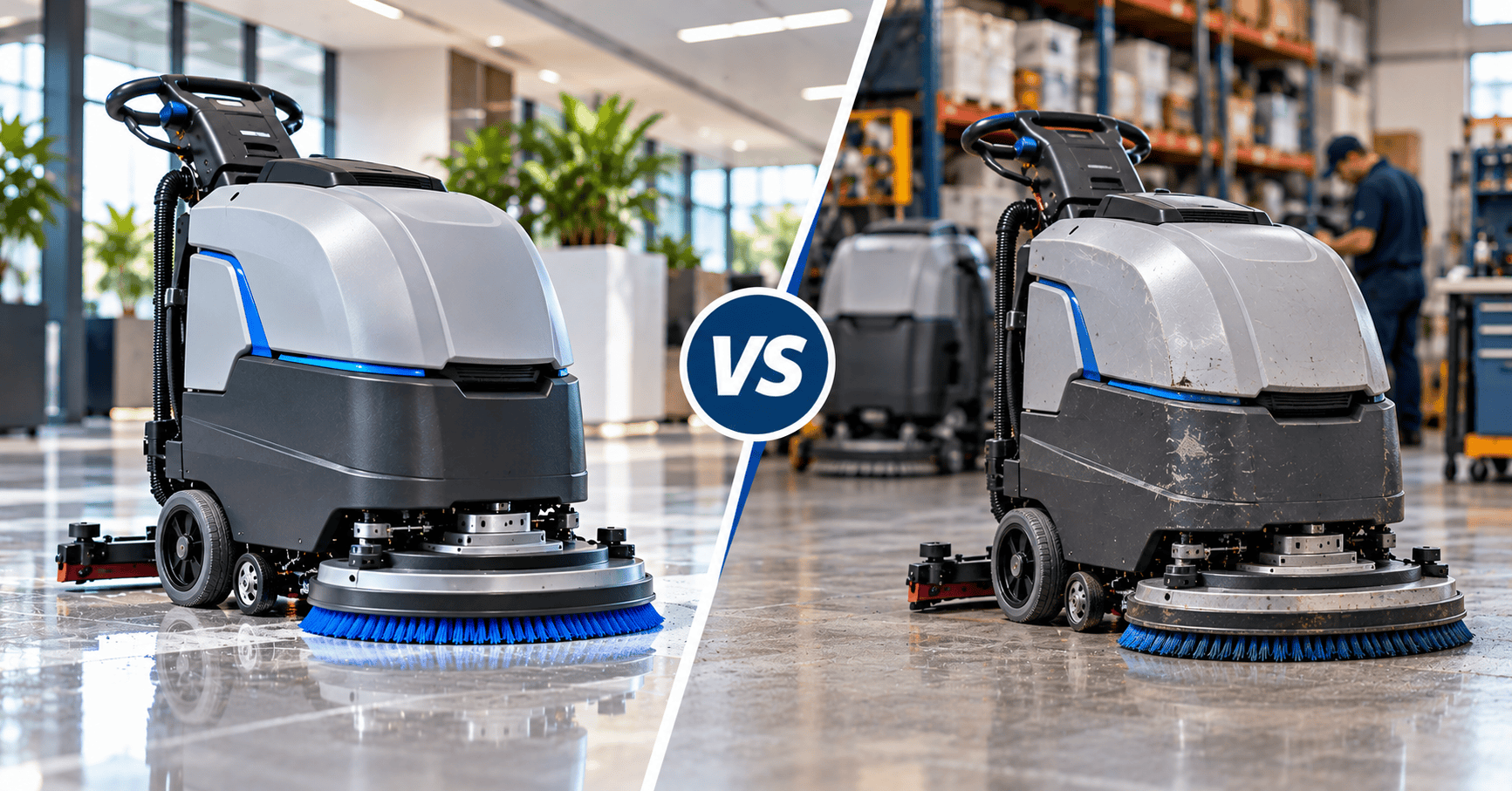
Ignoring routine maintenance can lead to reduced cleaning performance, excessive vibration, overheating, damaged floor finishes, and unexpected equipment downtime. Regular maintenance also gives operators an opportunity to identify small problems before they become expensive repairs.
A clean and properly maintained machine is simply easier to operate and more consistent during daily floor care.
Clean the Buffer After Every Use
One of the simplest maintenance habits is cleaning the machine after every job.
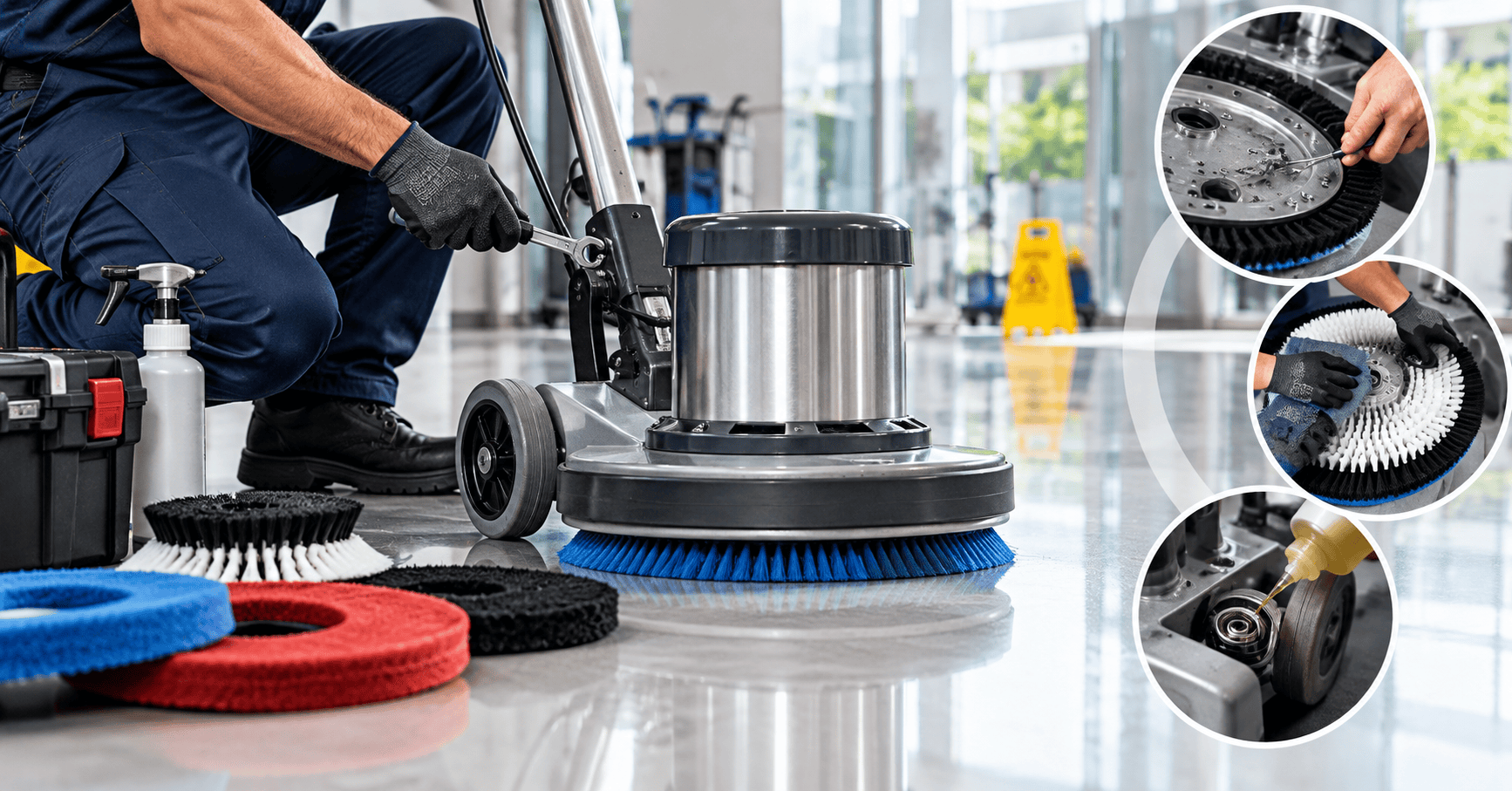
Remove the floor pad and inspect it for dirt, debris, or pieces of material that could affect performance. Clean the pad according to the manufacturer’s recommendations and allow it to dry properly before storage.
The underside of the machine should also be cleaned regularly. Dirt and residue can collect around the pad driver and other components. Removing this buildup helps keep the machine operating smoothly and reduces the chance of debris affecting the floor during the next cleaning session.
Wipe the exterior of the buffer with a clean cloth and use an appropriate cleaner when necessary. Avoid excessive water around electrical components.
Inspect the Floor Pad and Pad Driver
The floor pad plays an important role in both cleaning performance and floor protection. A worn, uneven, contaminated, or damaged pad can produce inconsistent results and may even damage a finished floor.
Before operating the machine, check that the pad is clean, properly centered, and securely attached. Replace pads when they become excessively worn or when they no longer provide the desired results.
It is also important to use the correct pad for the flooring application. Different floors and maintenance procedures require different types of pads. Using the wrong pad can reduce performance and cause unnecessary wear to the floor surface.
Check the Power Cord and Electrical Components
For corded commercial floor buffers, the power cord should be inspected regularly. Look for cuts, exposed wires, damaged insulation, or other signs of wear. Never operate a machine with a damaged cord or plug. Electrical problems can create serious safety risks and may damage the equipment.
Keep the cord clean and store it neatly after every use. Avoid wrapping it tightly around sharp edges or storing the machine in a location where the cord can be crushed or damaged. Always disconnect the machine from the electrical outlet before changing the pad, inspecting components, or performing maintenance.
Keep the Motor Clean and Properly Ventilated
Dust and debris can affect motor ventilation, particularly when a floor buffer is used frequently or in dusty environments. A buildup around ventilation areas can restrict airflow and contribute to overheating.
Inspect the motor area regularly and remove dust according to the equipment manufacturer’s instructions. Some commercial floor machines may require additional motor maintenance depending on their design and operating environment.
If the machine begins overheating, producing unusual smells, losing power, or making unfamiliar noises, stop using it and have it inspected by a qualified technician.
Inspect Belts, Wheels, and Moving Parts
Depending on the model, commercial floor buffers may contain belts and other moving components that require periodic inspection.
Check for visible wear, unusual looseness, cracking, or damage. Wheels should move properly without excessive resistance, while moving components should operate without unusual noise or vibration.
Do not ignore changes in the way your buffer feels during operation. Increased vibration or unusual movement can indicate a problem that should be addressed before continued use.
Follow a Regular Maintenance Schedule
Daily maintenance should focus on cleaning, pad inspection, cord inspection, and checking the machine for obvious damage. Weekly maintenance can include a more detailed inspection of the pad driver, wheels, motor area, and other accessible components.
Monthly or scheduled maintenance should follow the specific recommendations provided by the manufacturer. Some machines require professional inspection or replacement of wear components after a certain number of operating hours.
Keeping a simple maintenance record can make this process easier. Record inspections, repairs, replacement parts, and service dates so your team knows when equipment needs attention.
Store Your Floor Buffer Correctly
Proper storage is often overlooked, but it can have a major effect on equipment life. Store the floor buffer in a clean, dry area away from excessive moisture, extreme temperatures, and unnecessary impact.
Remove and clean the pad before storage. Keep the cord properly organized and position the machine safely so it will not fall or become damaged. Good storage practices help ensure that the machine is ready to perform when the next cleaning job begins.
When Should You Call a Professional?
Routine cleaning and inspection can be handled by trained operators, but some repairs should be left to qualified technicians.
If your commercial floor buffer has electrical problems, persistent overheating, unusual motor noise, significant vibration, damaged internal components, or repeated performance issues, professional service is the safer choice.
Professional equipment service can also help extend the useful life of commercial floor machines and reduce unexpected downtime.
Final Thoughts
Commercial floor buffer maintenance does not have to be complicated. Cleaning the machine after use, inspecting pads and cords, keeping the motor area clean, checking moving components, and following the manufacturer’s maintenance schedule can make a significant difference.
A consistent maintenance routine protects your equipment, improves floor care results, and helps your cleaning team work more efficiently. For businesses that depend on commercial floor equipment every day, preventive maintenance is one of the simplest ways to protect an important investment.
Frequently Asked Questions
How often should a commercial floor buffer be maintained?
Basic cleaning and inspection should be performed after every use. More detailed inspections should be completed regularly according to the manufacturer’s recommendations and the amount of machine usage.
How do I know when a floor buffer pad needs replacement?
Replace the pad when it becomes excessively worn, uneven, damaged, heavily contaminated, or no longer delivers the desired cleaning or polishing results.
Can I clean a commercial floor buffer with water?
Avoid excessive water, especially around electrical components. Use a clean cloth and an appropriate cleaner according to the manufacturer’s instructions.
What should I do if my floor buffer starts vibrating?
Stop the machine and inspect the pad, pad driver, wheels, and other accessible components. An uneven or improperly installed pad may cause vibration, but persistent vibration should be evaluated by a qualified technician.