Industrial Floor Sweeper vs. Vacuum Sweeper: Understanding Differences and Applications
Keeping industrial and commercial floors clean is essential for maintaining workplace safety, improving productivity, and creating a professional environment. However, choosing the right cleaning equipment can be challenging, especially when comparing an industrial floor sweeper with a vacuum sweeper. Although both machines are designed to remove dirt and debris, they use different cleaning methods and serve different purposes.
Understanding the differences between these machines can help facility managers, warehouse operators, and cleaning professionals make an informed investment. In this guide, we will explore how industrial floor sweepers and vacuum sweepers work, where they perform best, and how to choose the right equipment for your facility.
What Is an Industrial Floor Sweeper?
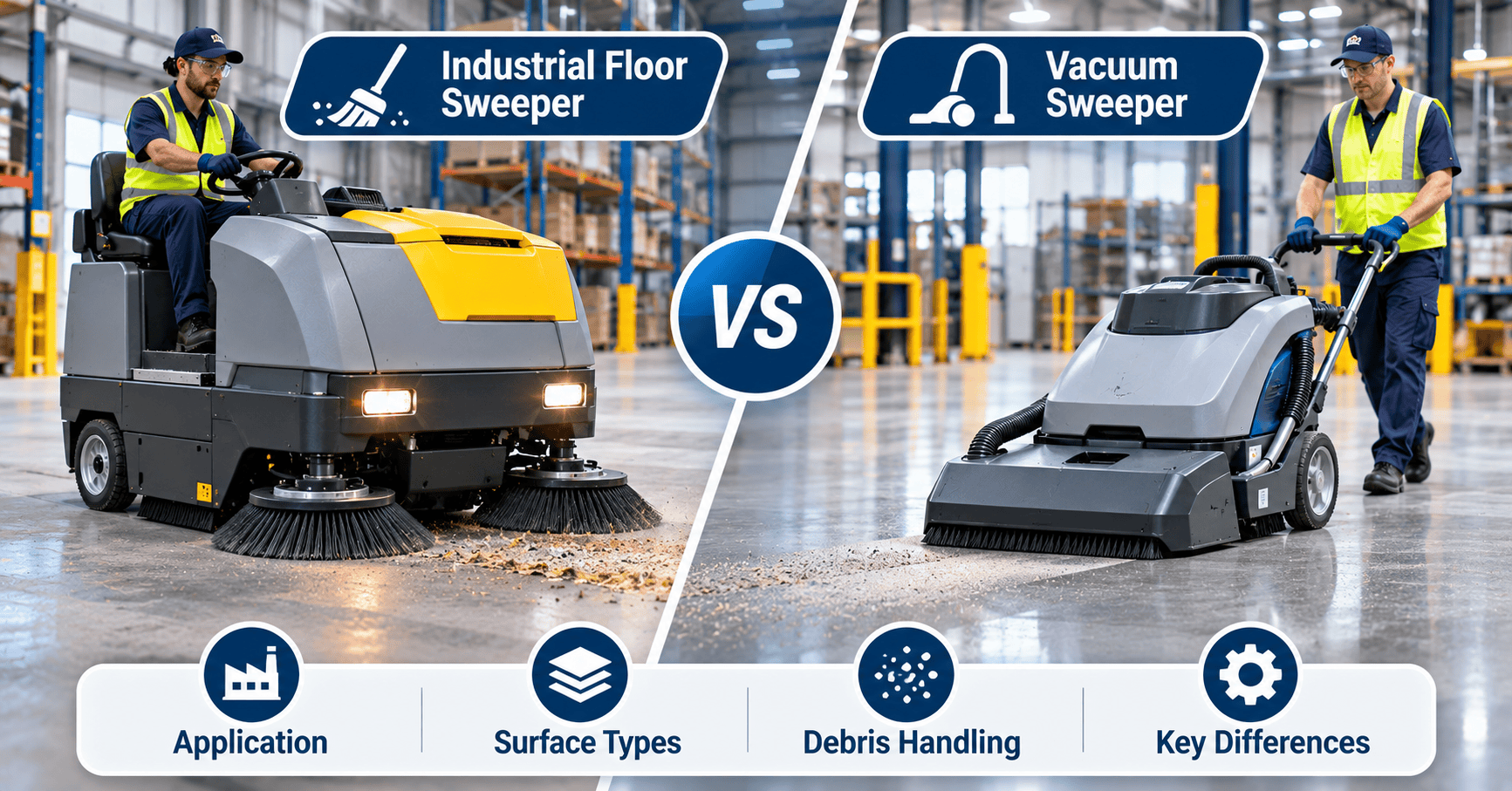
An industrial floor sweeper is a cleaning machine designed to collect loose dirt, dust, leaves, packaging materials, and other debris from large floor areas. It typically uses rotating brushes to move debris into a collection hopper, allowing operators to clean extensive spaces more efficiently than traditional sweeping methods.
Industrial floor sweepers are available in walk behind and ride on models. Walk behind machines are suitable for smaller areas and spaces with obstacles, while ride on sweepers are ideal for warehouses, distribution centers, manufacturing plants, and other large facilities.
One of the main advantages of an industrial floor sweeper is its ability to cover large areas quickly. It reduces manual labor, improves cleaning consistency, and helps maintain cleaner floors throughout the working day.
What Is a Vacuum Sweeper?
A vacuum sweeper combines mechanical sweeping with a vacuum collection system. Brushes loosen and direct debris toward the collection area, while suction helps capture fine dust and prevent it from spreading into the surrounding air.
This makes vacuum sweepers particularly useful in environments where dust control is important. Manufacturing facilities, warehouses, workshops, and distribution centers can benefit from their ability to collect both loose debris and finer particles.
Many commercial vacuum sweepers also include filtration systems that help retain dust inside the machine. Depending on the model, these systems may offer automatic filter cleaning and adjustable suction to support consistent performance in demanding environments.
It is important to understand that a vacuum sweeper is not the same as a standard commercial vacuum cleaner. A vacuum sweeper is generally designed to cover larger floor areas and collect debris through a combination of brushes and suction.
Industrial Floor Sweeper vs. Vacuum Sweeper: Key Differences
The biggest difference between these machines is how they handle debris and dust. An industrial floor sweeper primarily relies on brushes to collect loose materials. It is an excellent choice for removing larger debris, including paper scraps, leaves, dirt, and other everyday waste.
A vacuum sweeper adds suction and filtration, making it more effective when fine dust needs to be collected rather than redistributed across the floor. Dust control is another important consideration.
Traditional sweeping systems can release some fine particles into the air, depending on their design and operating conditions. Vacuum sweepers are better suited to applications requiring additional dust collection, although their effectiveness depends on the filtration system and the type of material being collected.
Maintenance requirements can also differ. Both machines need regular hopper emptying, brush inspections, and routine servicing. Vacuum sweepers may require additional attention to filters and suction components.
When comparing equipment, consider the total cost of ownership, including purchase price, replacement parts, maintenance, energy consumption, and operator time.
Best Applications for Vacuum Sweepers
Vacuum sweepers are often the better choice when fine dust is a major concern. Workshops, industrial production areas, and facilities that generate fine dry particles may benefit from a machine that combines sweeping action with effective dust collection.
They can also be useful in warehouses where dust accumulates around storage racks, equipment, and frequently traveled aisles. Better dust management can support housekeeping practices and help maintain a more comfortable working environment.
Before selecting a vacuum sweeper, assess the material being collected. Ordinary dry dust and debris differ significantly from combustible dust, hazardous substances, and other specialized materials. These applications may require equipment specifically designed and certified for the relevant hazards.
How to Choose Right Industrial Cleaning Equipment
Start by evaluating your facility’s size, floor surface, debris type, and cleaning frequency. A large warehouse with cardboard scraps and general dirt may operate efficiently with a conventional industrial floor sweeper. A production facility with persistent fine dust may benefit more from a vacuum sweeper with suitable filtration.
Next, consider the layout of your building. Narrow aisles and crowded workspaces may require a compact walk behind machine, while expansive open floors can justify a ride on model.
Budget is another important factor, but the lowest purchase price does not always deliver the best long term value. Consider maintenance costs, parts availability, machine durability, and expected cleaning productivity before making a decision.
Lifetime Equipment offers a range of commercial floor sweepers and vacuum cleaning equipment to accommodate different facility requirements. Comparing available machine specifications and matching them to your daily cleaning challenges can help you select equipment that delivers reliable performance.
Frequently Asked Questions
1. Is an industrial floor sweeper better than a vacuum sweeper?
Neither machine is universally better. An industrial floor sweeper is ideal for collecting loose debris across large areas, while a vacuum sweeper is generally preferable when fine dust collection and filtration are priorities.
2. Can a vacuum sweeper be used in a warehouse?
Yes. Vacuum sweepers can be effective in warehouses where dust and loose debris accumulate. The appropriate machine depends on the floor area, debris type, filtration requirements, and layout.
3. How often should industrial sweepers be maintained?
Maintenance frequency depends on the manufacturer’s recommendations and operating conditions. Operators should regularly inspect brushes, empty collection hoppers, check filters where applicable, and schedule routine servicing.
4. What should I consider before purchasing a floor sweeper?
Evaluate floor size, surface type, debris levels, dust control needs, maneuverability, maintenance requirements, and budget. Choosing equipment that matches your facility’s specific cleaning demands helps improve efficiency and long term value.
Final Thoughts
Choosing between an industrial floor sweeper and a vacuum sweeper comes down to understanding your cleaning priorities. Both machines can improve productivity and reduce manual effort, but their effectiveness depends on the environment in which they operate.
By evaluating your facility’s requirements and comparing available equipment carefully, you can invest in a cleaning solution that supports safer, cleaner, and more efficient operations.